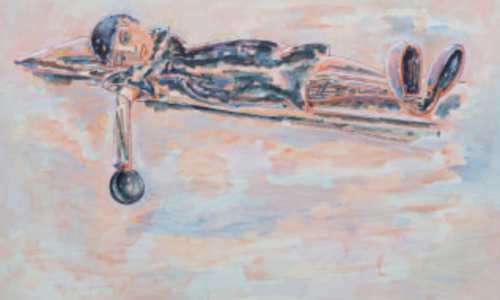
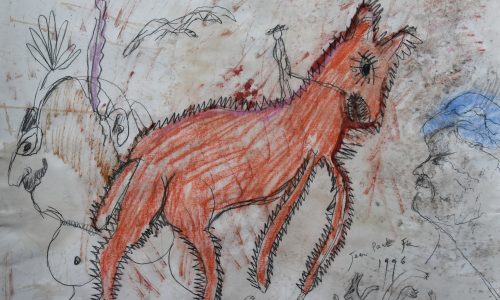
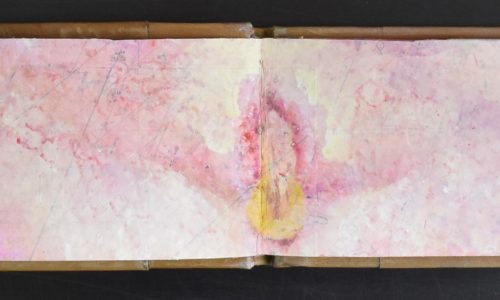
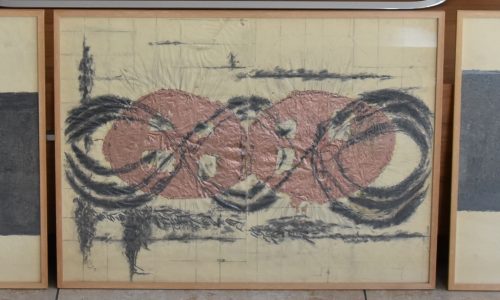
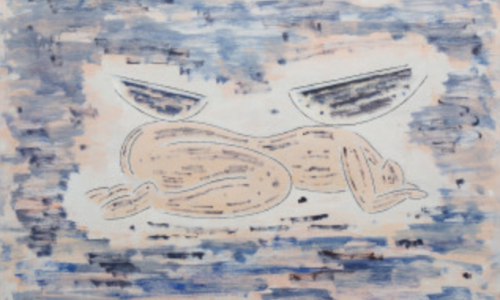
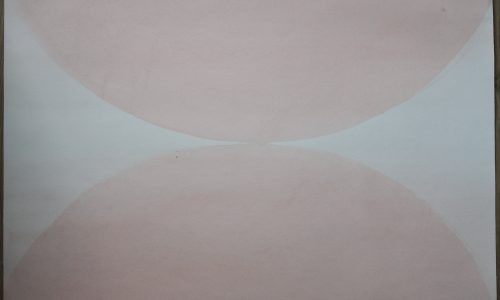
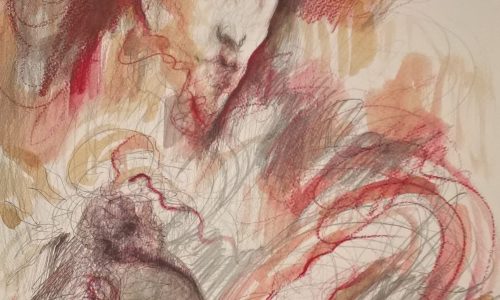
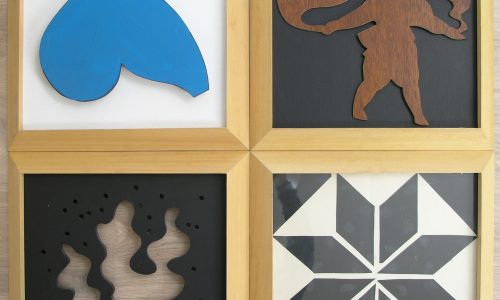
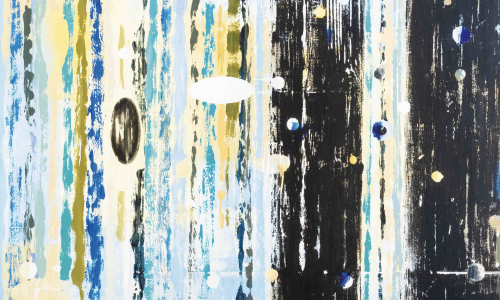
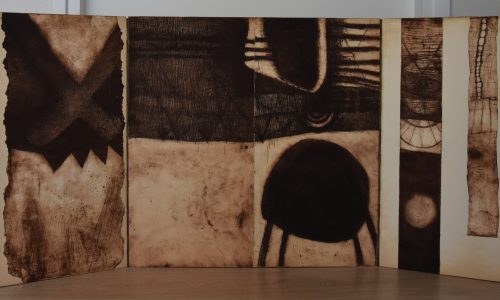
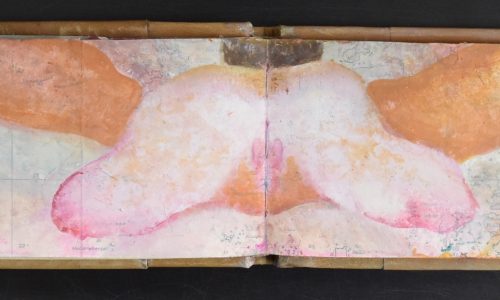
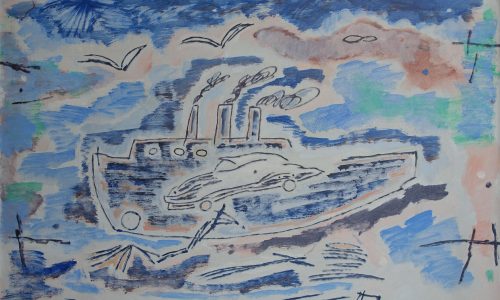
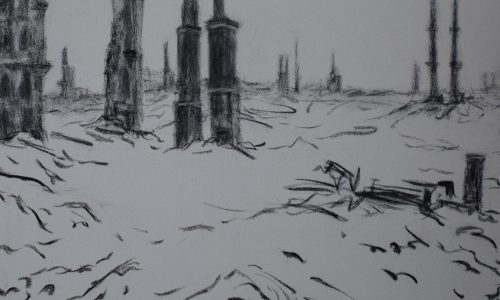
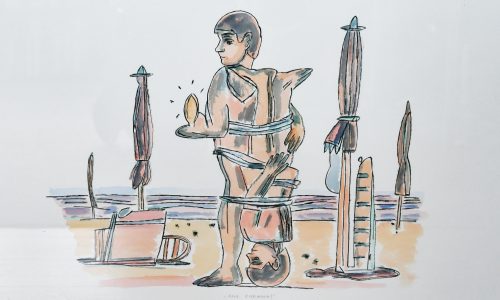
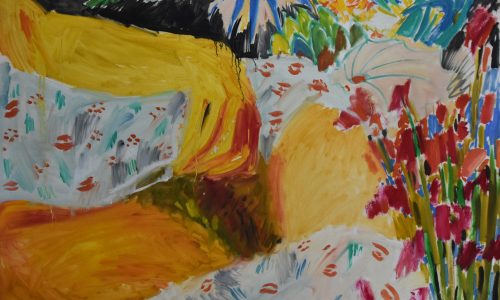
Maria Roosen (Oisterwijk, 1957) engages in drawing, watercoloring, and sculpture. Utilizing a variety of materials such as wood, gold leaf, and wool, Roosen has also worked extensively with glass since 1988. Themes of growth, blooming, and development are prevalent throughout her body of work, which is evident in the way Roosen allows things to unfold during the creative process.
Roosen personally designs and draws her own sculptures, but she may delegate the execution to others, particularly when working with glass blowing. However, she does not see this as a hindrance, but rather something that grants her freedom: “This allows me to ask for things that I would not be able to do myself.”
Glass also features heavily in Roosen’s sculpture “Borstentros” (2010), which is included in the sculpture garden of Museum Arnhem. Balls in various shades of pink are strung together like a cluster of berries. Glass is simultaneously hard and fragile, and Roosen often seeks out such contrasts. This can be seen in her use of small and large elements, as well as nature and culture. For her work “Mirakel” (2001), Roosen attached a wooden “church” – 9 by 9 by 7 meters – to the exterior wall of the Sint Eusebius church in Arnhem.
The replica of the church hangs as an additional chapel on the outside of the building. Nature and culture intertwine in works such as “Gewassen bomen” and “Touch of gold,” where Roosen places reflective “fungi” made of metallic-looking glass on tree trunks.
Roosen studied at the Moller Institute (1976-1981) and the art academy (1981-1983), both located in Tilburg. Her work has been shown in various exhibitions including De Vishal (Haarlem), Singer Laren, Galerie Fons Welters (Amsterdam), and the Groninger Museum. In 1995, Maria Roosen, along with Marijke van Warmerdam and Marlene Dumas, represented the Netherlands at the Venice Biennale.
www.ftn-books.com has several Roosen publications available.