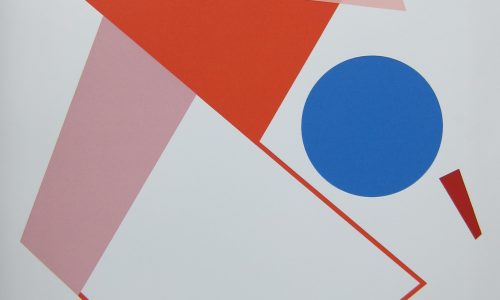
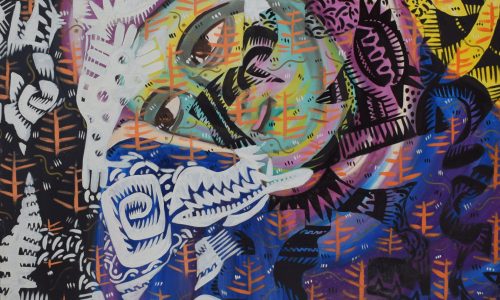
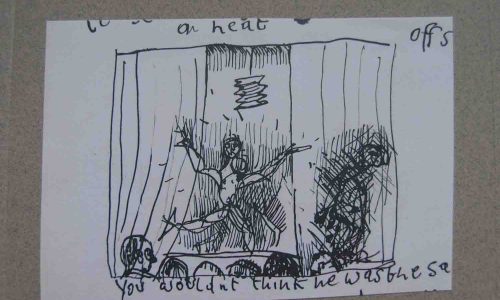
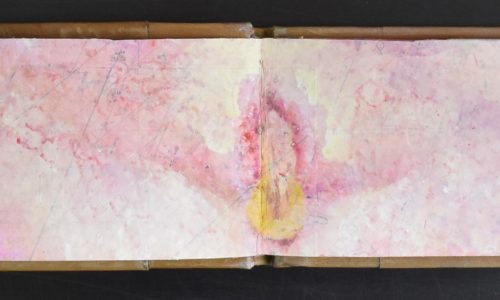
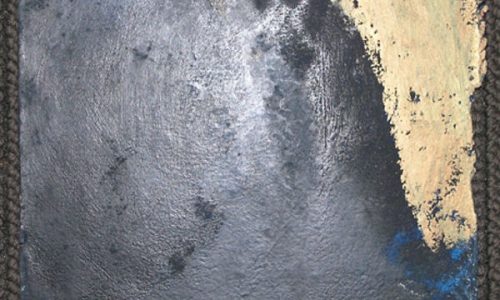
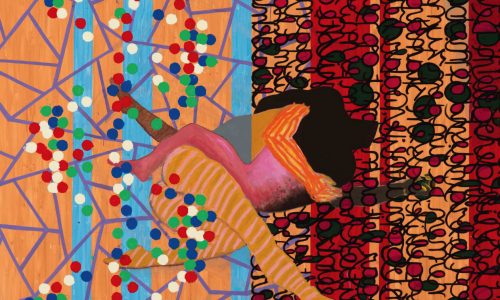
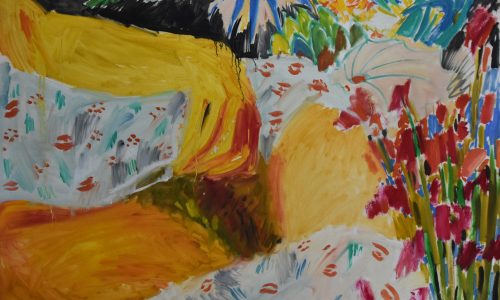
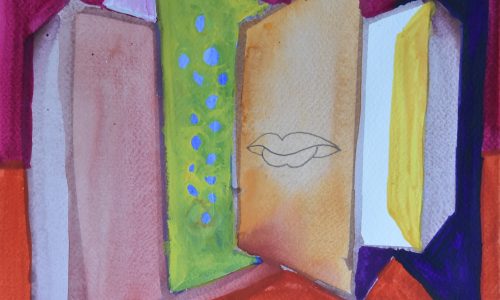
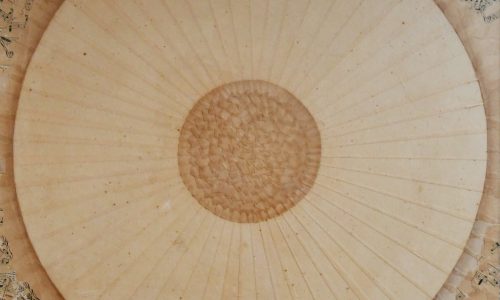
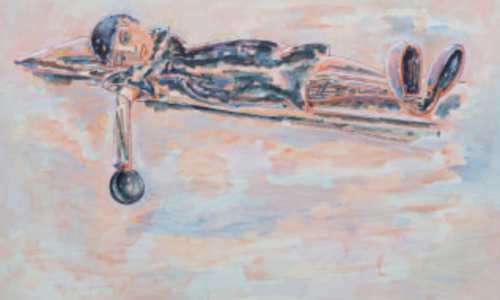
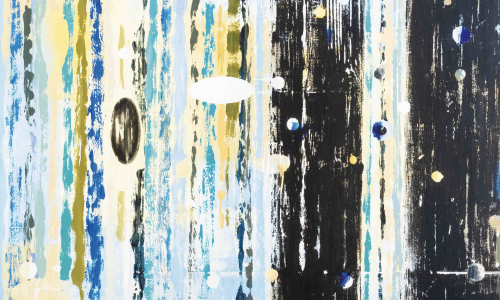
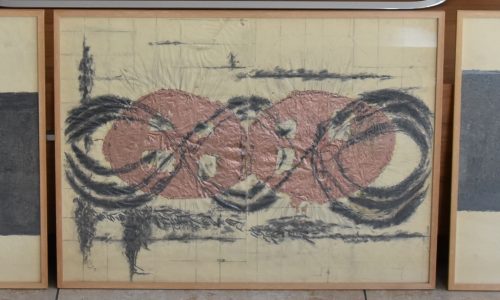
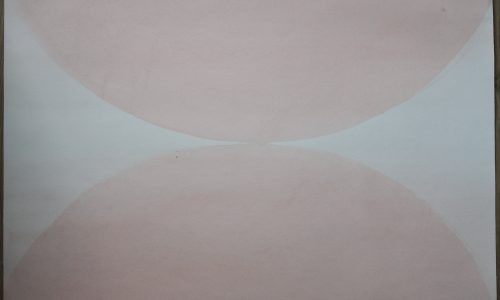
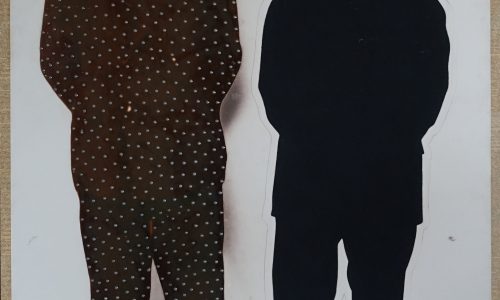
…..and the third encaustiek. A small, but rather spectacular shaped yellow composition.
…..and the third encaustiek. A small, but rather spectacular shaped yellow composition.

A few days ago i read an article on the portraits by Hiroshi Sugimoto and i remembered the book i had available at www.ftn-books.com. I searched for it and looked through it and noticed that style wise there is no difference the photographs he makes presently compared to the ones he made some 20 years ago. These photographs are truly fascinating and prove that Hiroshi Sugimoto is an outstanding photographer.
Here follows the article by Spencer Bokat-Lindell who makes his observations on the recently published “Portraits” book by Sugimoto.

Hiroshi Sugimoto has spent a career photographing fictions. When he moved to New York from Japan in 1974, by way of Los Angeles, he intended to find work as a wedding photographer. Instead, he took his camera to the Museum of Natural History, where he developed a lifelong fascination with dioramas. He photographed the taxidermy there, already frozen in their meticulously staged tableaux, and, as he writes, “I realized that I too could bring time to a stop. My camera could stop time in the dioramas—where time had already been halted once—for a second time.” This doubling of perspective, which has since become a signature of Sugimoto’s work, can produce unexpected and uncanny transformations: a 1976 photo from his “Dioramas” series, for example, shows a stuffed polar bear on a faux icescape, looming over a seal, its teeth bared, as though ready to strike. Twice removed from its natural setting, the scene unfreezes. It could easily be confused for a photo of a real bear, a real icescape. “My life as an artist began,” Sugimoto writes, “when I saw with my own eyes that I had succeeded in bringing the bear back to life on film.”
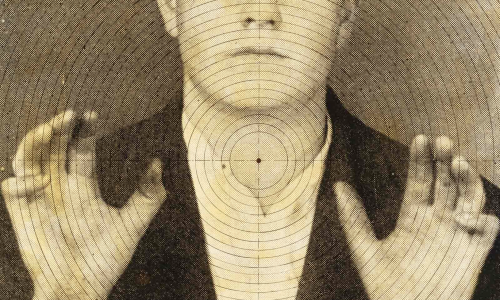
Sugimoto achieves similar feats in his latest collection, “Portraits,” which will publish this month. For this series, Sugimoto traveled to the Madame Tussauds wax museums in London and Amsterdam, where he selected subjects that span some two thousand years of history. As in his Diorama series, the imposition of photographic distance has a kind of embalming effect on Sugimoto’s subjects, rendered somehow more lifelike in the act of preservation. “Photographs,” Susan Sontag once wrote, “are a way of imprisoning reality.” But in Portraits, Sugimoto uses his camera to opposite effect, creating counterfeit realities that give history back to the dead: “However fake the subject,” he writes, “once photographed, it’s as good as real.”—Spencer Bokat-Lindell


Hildo Krop is truly the one and only city sculptor of the city of AMsterdam. When you see an ornament at a building or a statue on a square there is a fair chance that it was done by Hildo Krop. Krop was active in the period that Amsteram had its biggest growth .

It was in preparation of the Olympic games of 1928 and many new buildings and parks were built in those days and if one wanted to make them more beautiful with a sclpture or statue, Hildo Krop was the artist of choice for many new projects in those days.
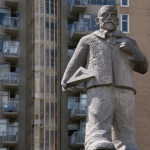
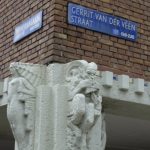
This was recognized by the Stedelijk Museum who devoted an exhibition to Krop in 1964 and had Wim Crouwel design the catalogue with the exhibition. Since that year there has been a growth of interest in Hildo Krop as an artist which resulted in a Museum devoted to Hildo Krop….location Amsterdam and on the internet at : http://hildokrop.nl
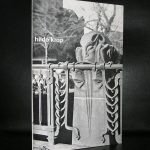
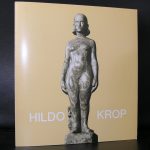
The Wim Crouwel publication is available at www.ftn-books.com

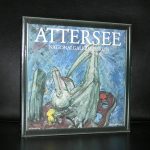
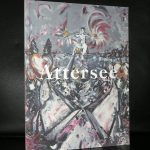
Christian Ludwig Attersee is a contemporary Austrian artist. Working in an interdisciplinary practice that combines music, speech, photography, and video, the primary tenet of Attersee’s art is painting. His Neo-Expressionist canvases are rendered with vibrant color, blending abstract form and space with representational images related to the human figure, music, literature, and sexuality. Describing his efforts as an attempt to create a new artistic medium, his work often contains fantastical object inventions. Born on August 28, 1940 in Bratislava, Austria, he is considered one of the foremost contemporary artists of his home country, and represented Austria at the Venice Biennial in 1984. He has been the subject of over 500 solo exhibitions throughout Europe and the United states, and is the recipient of the Austrian Cross of Honor for Science and Art.
This is how Artnet describes Attersee however there is more to the art of Christian Ludwig Attersee, because both the Groninger Museum and Stedelijk Museum have art by Attersee in their collections and the Stedelijk Museum devoted a special exhibition to the artist. An exhibition initiated by Rudi Fuchs who is a longtime admirer of the artist. Together with Brus and Nitsch , Attersee i becoming increasingly more important by the year.
www.ftn-books.com has some Attersee publications available.

For me Mucha was a great way to start appreciating art. Together with Henri de Toulouse Lautrec ( roughly from the same period), Alfons Mucha was the artist i appreciated the most in my mid teenage period. Accessible art and still a little bit more avant garde than the Impressionist painters who were widely appreciated in those days. Mucha was THE Art Nouveau artist and together with some French and Belgian artist was the top in Art Nouveau art. The art of Alfons Mucha is highly recognizable. The use of women models who look straight at you is one of his trademarks.

Since for me personally a lot has changed. From the accessible Art Nouveau by Mucha i made a “travel” through art history which resulted in appreciating Minimal and conceptual art. Still Mucha has a lot of quality and for those seeking a nice work by an Art Nouveau , please include the works by Mucha, since there are many extremely nice prints now available since this artist is copyright free. For those looking for some publications on Mucha , visit www.ftn-books.com

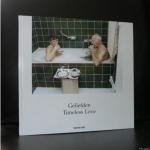
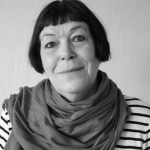
Two reasons why i want to write a short article on Marrie Bot. The first is that Marrie Bot makes photographs that have one quality in common. Each photograph shows the essence of things. This is shown probably the best way in the series GELIEFDEN/TIMELESS LOVE. These are elderly couples photographed while they are making love. This is not arousing at all, but shows tenderness and one realizes, whatever age you have, that making love and enjoying, it is really timeless . But this is not the only series in which she excels. Her series of LOURDES is breathtaking too. www.ftn-books.com has some titles by Bot available.
The works by Marrie Bot have been included in many Public an private collections. among them :
Stedelijk Museum, Amsterdam
The National Institute for the Arts,Amsterdam
Museum for Jewish History, Amsterdam
Museum for Art and Religion, Uden
Erasmus University, Rotterdam
The Print collection of the University of Leiden
Art Foundation of Rotterdam
The Municipal Archive of Rotterdam
The Municipal Archive of Amsterdam
Bibliothèque National, Paris
Municipal Collection Château d’Eau,Toulouse
Museum Nicéphore Niepce, Châlon sur Saône
Graham Nash Collection, Pasadena
Heineken Art Collection, Amsterdam
Helmut Gernsheim Collection in the Reiss-Engelhorn- Museum, Germany
Private Collections in the Netherlands and abroad
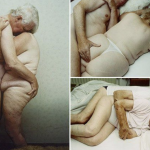
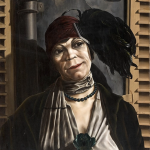
BTW. Just look at the resemblance i noticed between Marrie Bot and the painting Bertha by Pyke Kock ( over 60 years in between both portraits)

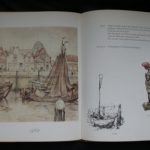
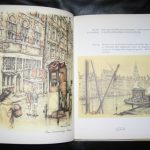
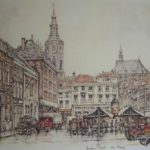
Readers who know something about dutch illustrators most know the name Anton Pieck.
Pieck became famous by designing the Fairy Tale park of the original DE EFTELING amusement park. for which he designed the caracters and secenery. Beside de Efteling he is very well known in the Netherlands for his Romantic Dickensian illustrations of which many aere/are used as Christmas cards. But there is also a more serious “romantic” artist in Anton Pieck and this shows best in his books he illustrated on Amsterdam and specially the book DE NEDERLANDEN. It is the more romantic , but still original part of the Netherlands he shows in his drawings etchinsg and paintings. The book de NEDERLANDEN is available at www.ftn-books.com and personalluy i think this title belongs to the best of the books illustrated by Anton Pieck.



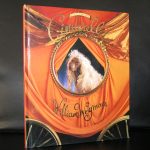
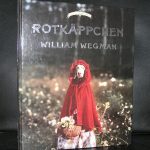
Because we also have dogs ( and certaily not the easiest ones ) i remembered there is one artist photographer who devoted his entire career and oeuvre to his Weimeraner dogs. His work always reminds me of the early works by Cindy Sherman, biut instead of Sherman being the subject in her staged photographs it is the dogs of Wegman who enact the scene which is photographed. One of the earliest books i found with his dogs was the fairy tale of “little red riding hood” staged and photographed by the dogs. On the site of Wegman there is a lot of information to be found on his photography, but the most interesting piece of information i found on Youtube:
Wegman originally intended to pursue a career as a painter. He received a Bachelor of Fine Arts in painting from Massachusetts College of Art and Design in 1965 and a Master of Fine Arts degree in painting from the University of Illinois at Urbana–Champaign in 1967.
By the early 70s, Wegman’s work was being exhibited in museums and galleries internationally. In addition to solo shows with Sonnabend Gallery in Paris and New York, Situation Gallery in London and Konrad Fisher Gallery in Düsseldorf, his work was included in such seminal exhibitions as “When Attitudes Become Form,” and “Documenta 5” and regularly featured in Interfunktionen, Artforum and Avalanche.
While he was in Long Beach, Wegman got his dog, Man Ray, with whom he began a long and fruitful collaboration. Man Ray, known in the art world and beyond for his endearing deadpan presence, became a central figure in Wegman’s photographs and videotapes. In 1982, Man Ray died, and was named “Man of the Year” by the Village Voice. It was not until 1986 that Wegman got a new dog, Fay Ray, and another collaboration began marked by Wegman’s extensive use of the Polaroid 20 x 24 camera. With the birth of Fay’s litter in 1989, Wegman’s cast of grew to include Fay’s offspring — Battina, Crooky and Chundo — and later, their offspring: Battina’s son Chip in 1995, Chip’s son Bobbin in 1999 and Candy and Bobbin’s daughter Penny in 2004.
Although primarily known as a photographer, Wegman returned to painting in the mid 1980s[2] Among his oeuvre of paintings are a number of canvases filled with smoke and fire that depict natural and manmade disasters. Volcano, in the collection of the Honolulu Museum of Art demonstrates this aspect of the artist’s work.
He appeared on The Colbert Report in 2010. Wegman is the author of numerous books for children, including the New York Times bestseller Puppies. His latest children’s book, Flo & Wendell, is published with Dial Books for Young Readers.
Wegman originally intended to pursue a career as a painter. He received a Bachelor of Fine Arts in painting from Massachusetts College of Art and Design in 1965 and a Master of Fine Arts degree in painting from the University of Illinois at Urbana–Champaign in 1967.
By the early 70s, Wegman’s work was being exhibited in museums and galleries internationally. In addition to solo shows with Sonnabend Gallery in Paris and New York, Situation Gallery in London and Konrad Fisher Gallery in Düsseldorf, his work was included in such seminal exhibitions as “When Attitudes Become Form,” and “Documenta 5” and regularly featured in Interfunktionen, Artforum and Avalanche.
While he was in Long Beach, Wegman got his dog, Man Ray, with whom he began a long and fruitful collaboration. Man Ray, known in the art world and beyond for his endearing deadpan presence, became a central figure in Wegman’s photographs and videotapes. In 1982, Man Ray died, and was named “Man of the Year” by the Village Voice. It was not until 1986 that Wegman got a new dog, Fay Ray, and another collaboration began marked by Wegman’s extensive use of the Polaroid 20 x 24 camera. With the birth of Fay’s litter in 1989, Wegman’s cast of grew to include Fay’s offspring — Battina, Crooky and Chundo — and later, their offspring: Battina’s son Chip in 1995, Chip’s son Bobbin in 1999 and Candy and Bobbin’s daughter Penny in 2004.
Although primarily known as a photographer, Wegman returned to painting in the mid 1980s.Among his oeuvre of paintings are a number of canvases filled with smoke and fire that depict natural and manmade disasters. Volcano, in the collection of the Honolulu Museum of Art demonstrates this aspect of the artist’s work.
www.ftn-books.com has some nice Wegman titles available



Germany has a great history of Woodblock printing. Dürer was one of the arliest of great artists who used the technique but the 20th century had his own group of great aretists who used the technique. Tere were of course the rtaist of the BLAUE REITER, but there was also the group of the BRÜCker to which Heckel belonged. Heckel is arguably one of the most abstract Brücke artists, but his technique is as good as all the other together, Personally i like Heckel very much and this has resulted in a nice selection of publications available at www.ftn-books.com
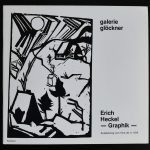
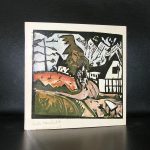
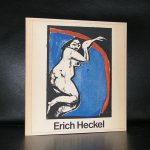
Heckel and other members of Die Brücke greatly admired the work of Edvard Munch, and aimed to make a “bridge” between traditional neo-romantic German painting and modern expressionist painting. The four founding members made much use of the print as a cheap and quick medium with which to produce affordable art.
Primitive art was also an inspiration to the members of the Die Brücke. It was Heckel’s brother who introduced the group to African sculpture, and it is noted that their acceptance of primitive art, which was to fortify decisively the expressive yearnings of European artists- Was unequivocal. It is through this style that they found a source of strength in the barbaric figures.
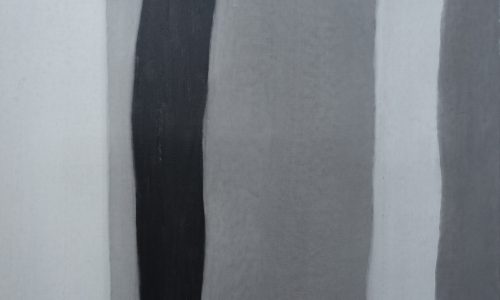
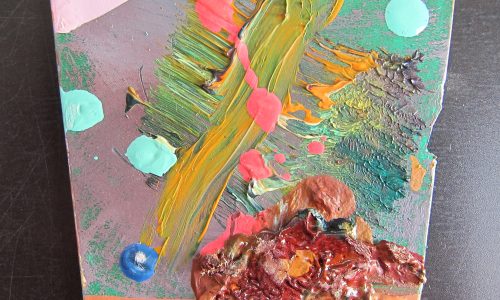
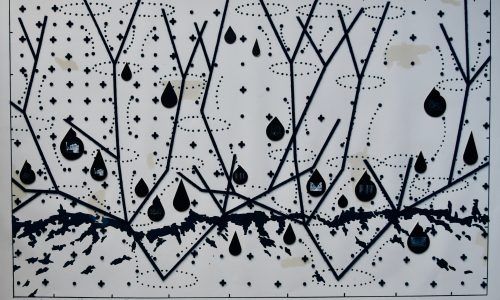
Here is the second encaustiek i want to present to you. Note the drips of wax paint on the side.