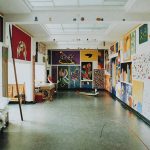
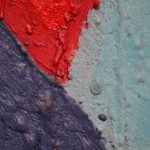
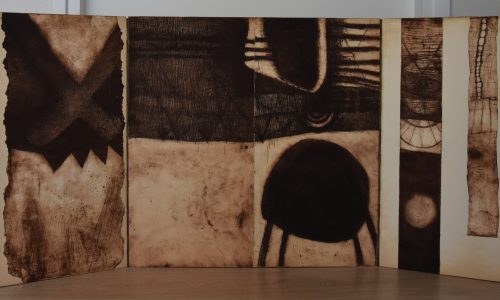
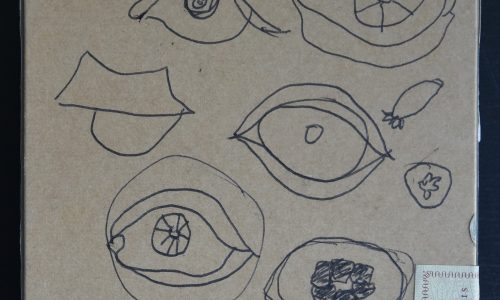
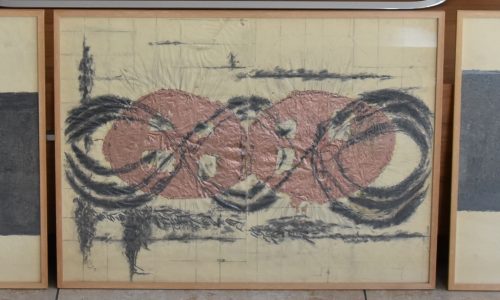
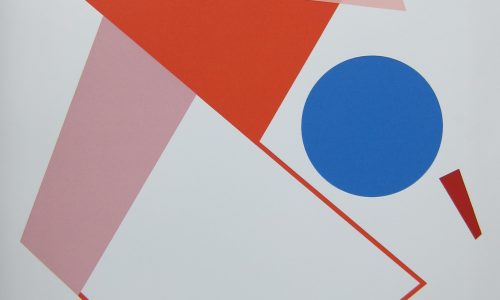
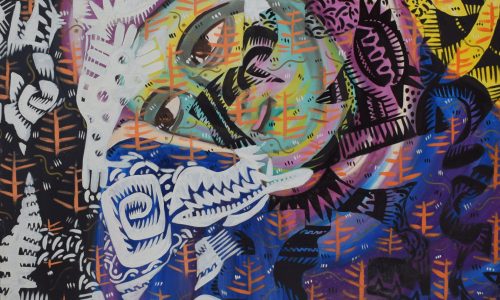
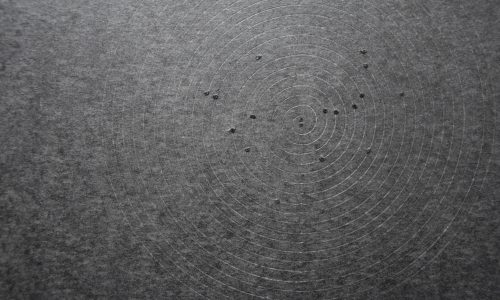
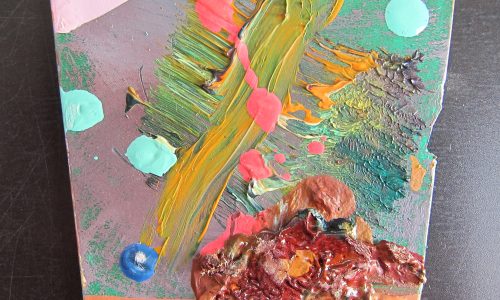
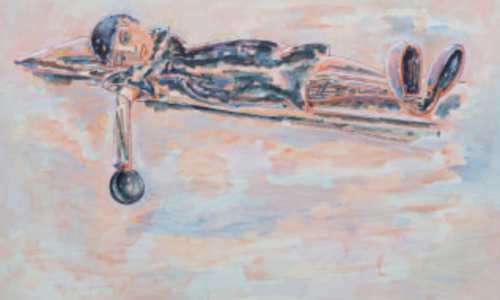
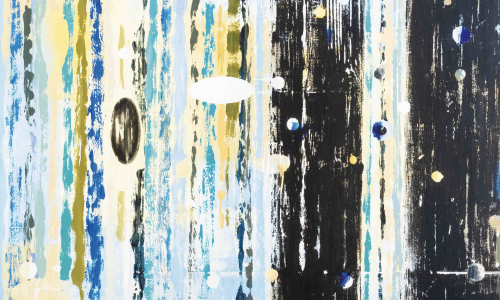
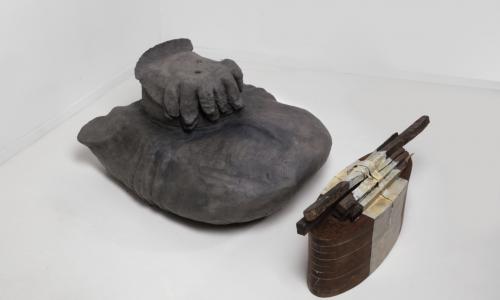
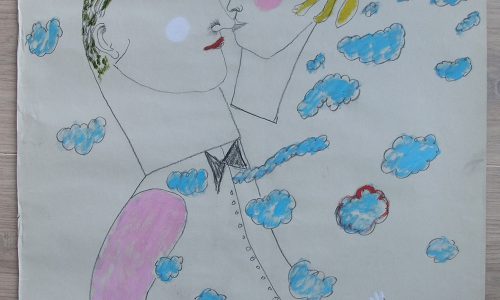
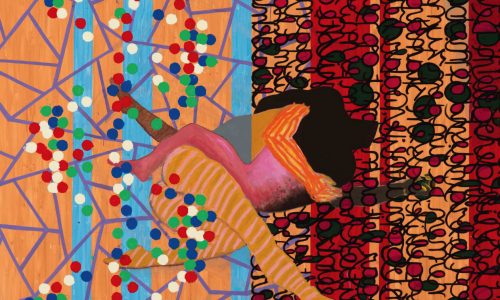
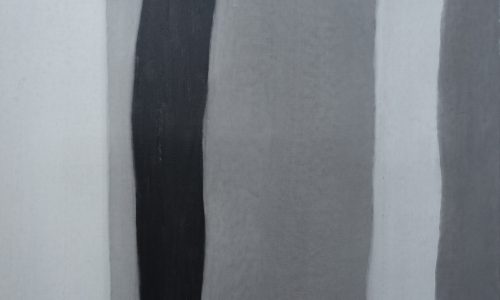
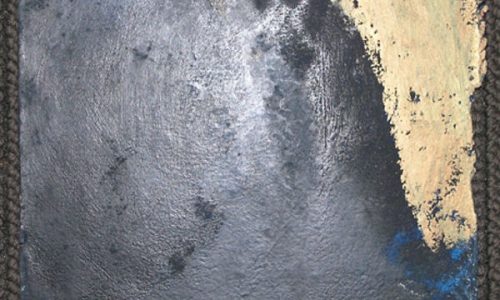
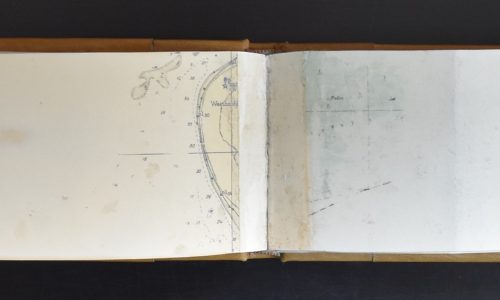
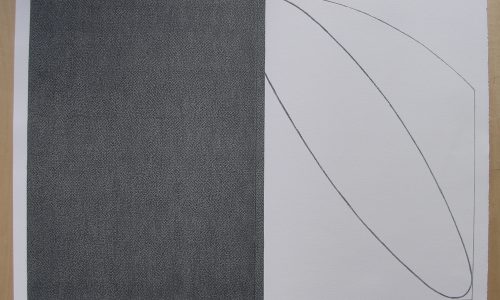
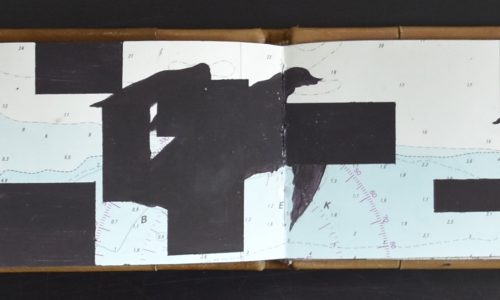
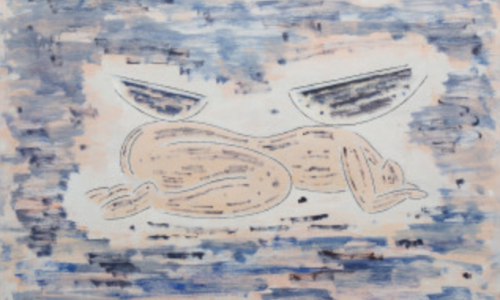
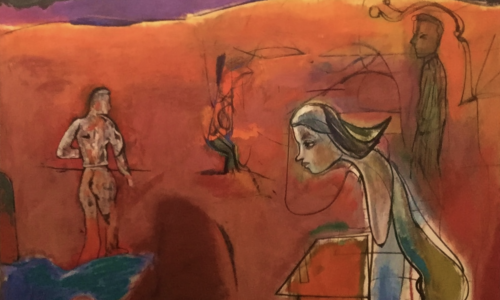
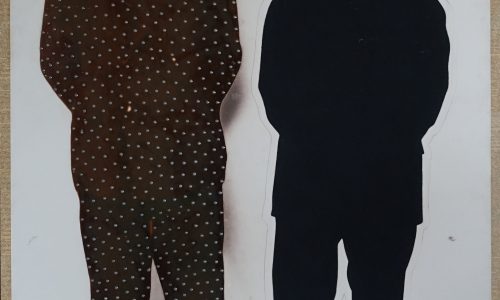
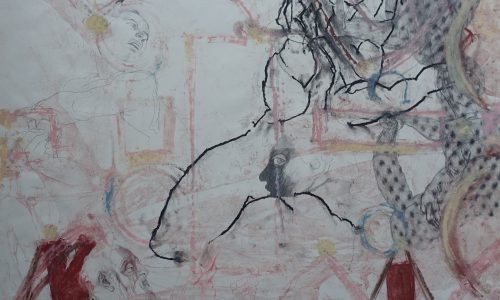
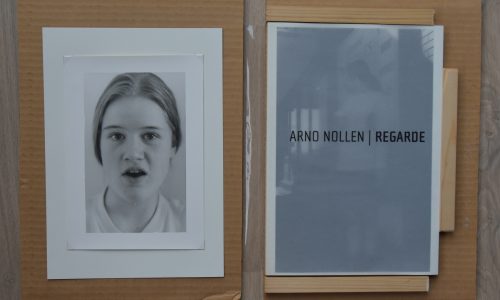
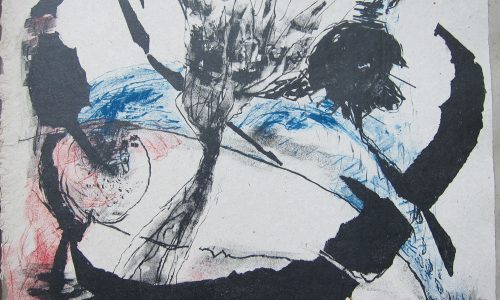
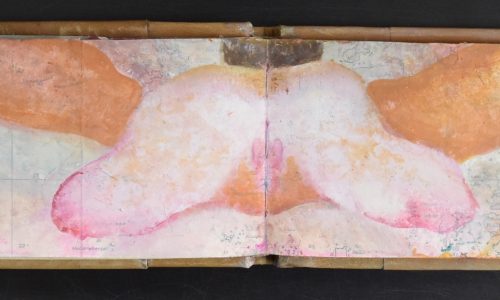
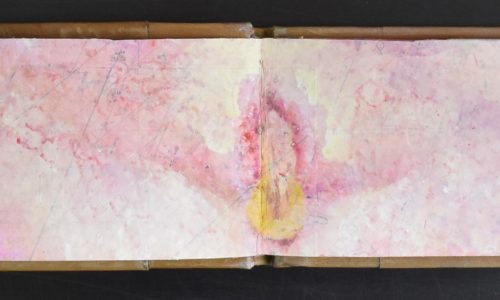
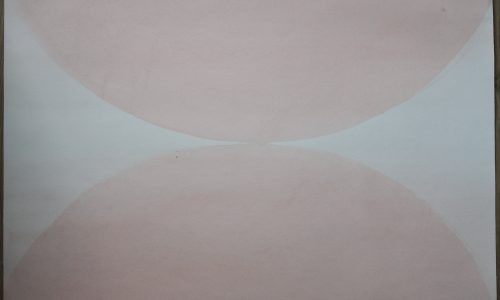
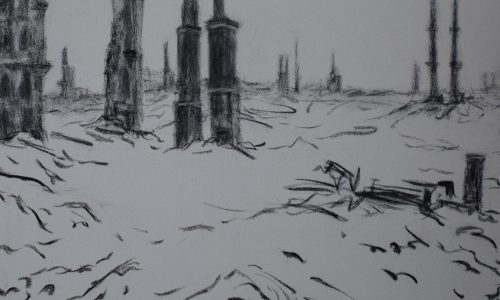
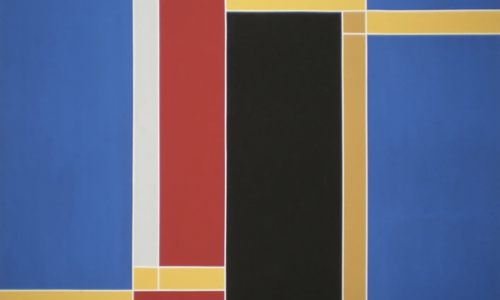
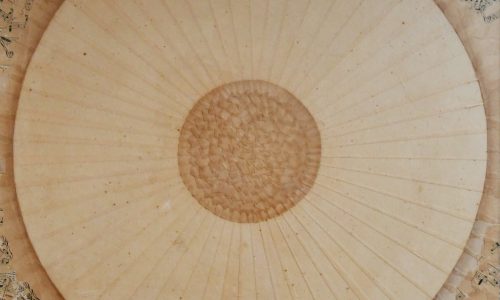
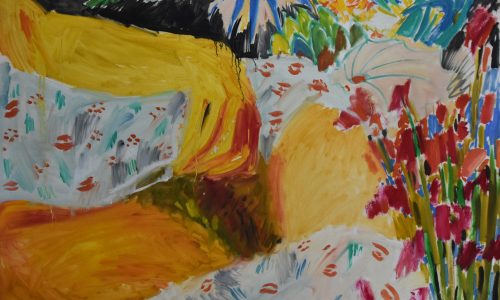
As promissed another detail which shows the thick layers of wax paint Piet uses to make his compositions. This painting was discussed earlier in another blog on Piet and has been presented on 3 locations before it finally was part of our collection. Among the locations was the Biotoop project at the Haags Gemeentemuseum.
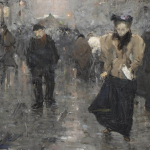
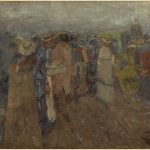
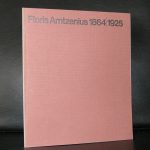
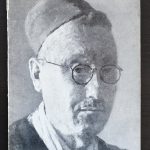
Floris Arntzenius is one of those painters who can be called a dutch impressionist. His touch is not as sunny as the French impressionists, but more subdued and influenced by weather and seasons in the Netherlands, making his paintings less bright and cheerfull. Still his depicting of daily life and townscapes makes his work of a rare quality. His painting can be compared with that of Jan Toorop, but where Toorop changed his style for several times during his life, Arntzenius stayed true to classic dutch impressionist scenes.
left Arntzenius / right Toorop
The Gemeentmuseum Den Haag has some very nice Arntzenius paintings in its collection and has published several catalogues over the years of which some are available at www.ftn-books.com
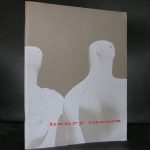
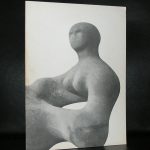
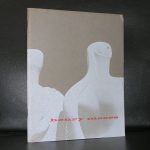
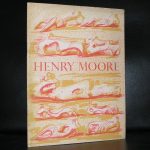
There has always been a fascination for Henry Moore and his works by the dutch. Since the beginning of his career he has had exhibitions at all the major museums in the Netherlands, which resuklted in purchses by museums and privste collectors. One of the last collectors to add a major work by Moore was Joop Caldenborgh who added a very large bronze sculpture by the artist. It was one of the last sculptures he added to his collection before he build the Voorlinden museum.
My guess is that eventually his majestic sculpture garden including the Moore and Sol LeWiit sculptures, will be integrated with the Museum Voorlinden.
I love the large Henry Moore that is outside the Schamhart building at the Gemeentemuseum Den Haag and learned to truly love this one , because it was my outside view at the Gemeentemuseum when i had my office over there. Later i moved to the offices at the Museum of education and had the complete Berlage building as my view, but the office with the Henry Moore in front and a Rijsselberghe painting in our room was a great place to work.
Since there is a long history of Henry Moore exhibitions in the Netherlands , i have collected many important Henry Moore catalogues of which the Stedelijk Museum one stands out since this one is designed by Willem Sandberg.
For me Giugiaro stands for car design. Specially the iconic Alfa Romeo GTV and Sprint are the cars i am thinking of when i think of Giugiaro, but others are reminded of other objects when they hear the name of Giugiaro, because he is one of the most influential Italian designers from our days. Coffee machimes, furniture, lamps etc. all by the hand or studio of Giugiaro have been produced in the last 50 years.
Giugiaro was named Car Designer of the Century in 1999 and inducted into the Automotive Hall of Fame in 2002 and this is the model i would like to share with you. After driving the original Austi Mini for a few years i changed to the even less reliable Alfa Romeo Sprint by Giugiaro. Less reliabel, but great fun to own and drive,
In addition to cars, Giugiaro designed camera bodies for Nikon, computer prototypes for Apple, Navigation promenade of Porto Santo Stefano, and developed a new pasta shape “Marille”, as well as office furniture for Okamura Corporation.
Giugiaro’s earliest cars, like the Alfa Romeo 105/115 Series Coupés, often featured tastefully arched and curving shapes, such as the De Tomaso Mangusta, Iso Grifo, and Maserati Ghibli. However, as the 1970s approached, Giugiaro’s designs became increasingly angular, culminating in the “folded paper” era of the 1970s. Straight-lined designs such as the BMW M1, Lotus Esprit S1, and Maserati Bora followed before a softer approach returned in the Maserati Merak, Lamborghini Calà, Maserati Spyder, and Ferrari GG50.
Giugiaro is widely known for the DeLorean DMC-12, featured prominently in the Hollywood blockbuster series Back to the Future. His most commercially successful design was the Volkswagen Golf Mk1.
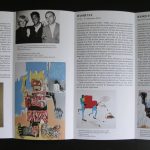
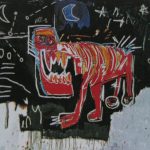
This is the exhibituion i remember most of all the exhibitions we visited during the last decade. It was a “one of a kind” event, which will never be repeated at such a scale. The exhibition covered over 100 Basquiat paintings and certainly not the smallest of them all. The entire FONDATION BEYELER ( except the Giacometti/Monet room) was devoted to one of the greatest of all painters from the 20th Century. At the time i had the foresight to take some extra Beyeler publicity folders with me and now i have decided to sell 3 of those to collectors. For this original publicity folder please take a look at www.ftn-books.com
He is an important dutch Typographer, but is not that known outside the Netherlands, but because Treebus has witnessed the transsition from lead printing into the digital age of printing it is nice to see how this process has taken effect in the designs of Treebus. Treebus has made numerous designs in those 32 years he was sdesigning papers, letters and forms for the STAATSDRUKKERIJ /Uitgeverij.
Treebus is one of those people that has influenced 3 genarations of designers, because his designs used by many over a period of 40 years
www.ftn-books.com has an excellent monographic book on Treebus available.
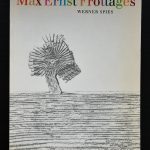
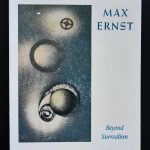
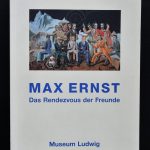
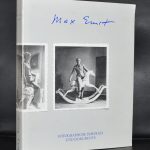
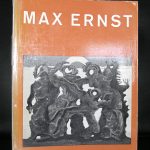
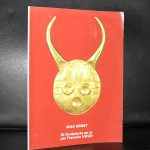
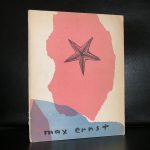
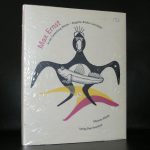
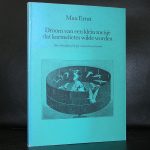
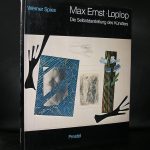
Without any focus on Ernst i have maneged to collect many titles on this artist. The first time i noticed hsi name is when i was very much interested in the the Fantastic / HET FANTASTICHE in de Kunst ( book availabel at www.ftn-books.com
Max Ernst, in full Maximilian Maria Ernst, (born April 2, 1891, Brühl, Germany—died April 1, 1976, Paris, France), German painter and sculptor who was one of the leading advocates of irrationality in art and an originator of the Automatism movement of Surrealism. He became a naturalized citizen of both the United States (1948) and France (1958).
Here is the excellent entry from the Encyclopedea Britannica
Ernst’s early interests were psychiatry and philosophy, but he abandoned his studies at the University of Bonn for painting. After serving in the German army during World War I, Ernst was converted to Dada, a nihilistic art movement, and formed a group of Dada artists in Cologne. With the artist-poet Jean Arp, he edited journals and created a scandal by staging a Dada exhibit in a public restroom. More important, however, were his Dada collages and photomontages, such as Here Everything Is Still Floating (1920), a startlingly illogical composition made from cutout photographs of insects, fish, and anatomical drawings ingeniously arranged to suggest the multiple identity of the things depicted.
In 1922 Ernst moved to Paris, where two years later he became a founding member of the Surrealists, a group of artists and writers whose work grew out of fantasies evoked from the unconscious. To stimulate the flow of imagery from his unconscious mind, Ernst began in 1925 to use the techniques of frottage (pencil rubbings of such things as wood grain, fabric, or leaves) and decalcomania (the technique of transferring paint from one surface to another by pressing the two surfaces together). Contemplating the accidental patterns and textures resulting from these techniques, he allowed free association to suggest images he subsequently used in a series of drawings (Histoire naturelle, 1926) and in many paintings, such as The Great Forest (1927) and The Temptation of St. Anthony (1945). These vast swamplike landscapes stem ultimately from the tradition of nature mysticism of the German Romantics.
In 1929 Ernst returned to collage and created The Woman with 100 Heads, his first “collage novel”—a sequence of illustrations assembled from 19th- and 20th-century reading material and a format which he is credited with having invented. Soon afterward he created the collage novels A Little Girl Dreams of Taking the Veil (1930) and A Week of Kindness (1934).
After 1934 Ernst’s activities centred increasingly on sculpture, using improvised techniques in this medium just as he had in painting. Oedipus II (1934), for example, was cast from a stack of precariously balanced wooden pails to form a belligerent-looking phallic image.
At the outbreak of World War II, Ernst moved to the United States, where he joined his third wife, the collector and gallery owner Peggy Guggenheim (divorced 1943), and his son, the American painter Jimmy Ernst. While living on Long Island, New York, and after 1946 in Sedona, Arizona (with his fourth wife, the American painter Dorothea Tanning), he concentrated on such sculptures as The King Playing with the Queen (1944), which shows African influence. After his return to France in 1953, his work became less experimental: he spent much time perfecting his modeling technique in traditional sculptural materials.
In the meantime i have collected many Max Ernst titles at www.ftn-books.com
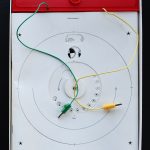
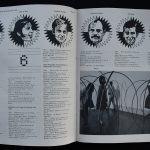
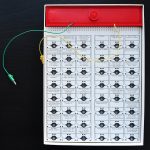
Imagine the old dutch game of ELECTRO . You habe to find the right combination between question and answer and than the light will light up when the answer is correct. This was the idea behind the play catalogue Swip Stolk designed together with Frans Haks for the ENVIRONMENT exhibition they organied in 1968 fro Studium Generale Utrecht.
For me the importance is not the design of the the play catalogeu but the participating artists. Among them…Morellet, Megert, Struycken, Le Parc and Gerstner.
The “creme de la Creme ” all within one exhibition. This exhibition from 1968 is almost forgotten and one of the reasons is the rare catalogue which was published with this exhibition. Now i have one copy available. Text by Frans Haks, design by Swqip Stolk and produced by Jumbo. A classic among the Sixties catalogues in teh Netherlands anmd well worthdt collecting. Available at www.ftn-books.com
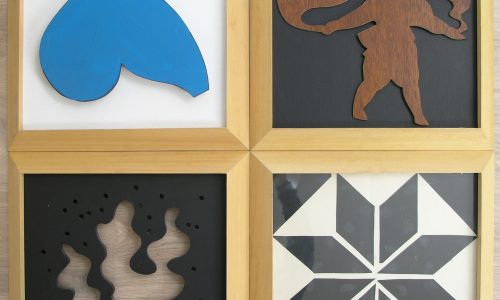
The following weeks two more details of early Piet Dirkx compositions. The first is a detail of a long lath on which 13 wooden panels are placed. These panels are far from random ,because these panels are individual compositions/paintings by themselves.
These panels come from the work SHALL I COMPARE THE TO A SUMMERS DAY.
I have been working at the Haags Gemeentemuseum for nearly 25 years . I have been moving somewhere around 1.000.000+ books in all these years and never…never…. seen this title before. I am an independent antiquarian bookseller for almost 20 years now and within these years i must have seen evn more books and never encountered this title before, so i did not know it existed, but it is there and it appears to be important too, because it is one of the first exhibitions which combines fashion and interior design over the ages and shows examples of each period. For those of you who did not know it existed. Here it is how it looks. The book is now available at www.ftn-books.com
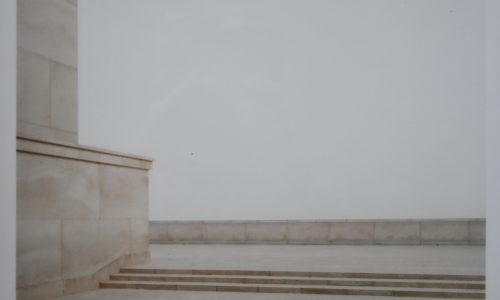
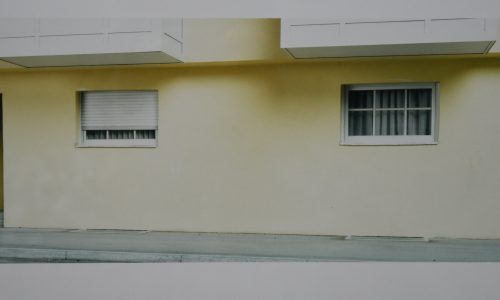
Artist/ Author: Oliver Boberg
Title : Memorial
Publisher: Oliver Boberg
Measurements: Frame measures 51 x 42 cm. original C print is 35 x 25 cm.
Condition: mint
signed by Oliver Boberg in pen and numbered 14/20 from an edition of 20