Captivated by the written word, concrete poetry, and the elegance of language permeating our everyday lives, American artist Erica Baum can be aptly described as a “poet-photographer.”
With her effortless implementation of tactics reminiscent of the Pictures Generation, conceptual art, and minimalism, Erica Baum has cultivated a distinct and authentic visual language. For the past two decades, her enigmatic close-ups of books, newspapers, and other printed material have delved into the intricacy, customs, and fundamentals of photography, continuously “rematerializing” its visual, tactile, and thematic qualities.
Erica Baum’s works possess a unique “photographic” quality: alongside the transitory and ephemeral nature of the constant flow of images, she imbues a tangible presence and a meticulous interest in the material context of photography. By capturing her series of photographs in intimate close-ups, honing in on unexpected details with a shallow depth of field, she evokes a poetic force: indexical precision paired with abstract and timeless qualities, akin to a collage, fragmented but with a strong narrative essence; seemingly mundane and trivial, yet imbued with meaning.
Baum’s photographs hold a special emotional resonance – each possesses a soul and commands utmost attention. They challenge and confirm in the most fundamental ways: text, image, writing – their essence, significance, and purpose – a profound understanding of our cultural society.
Erica Baum is a renowned figure in the realm of photography, acclaimed for her diverse series that capture the interplay of text and imagery within found printed materials. These range from commonplace paperback books to detailed library indexes and, most recently, sewing patterns. With an MFA from Yale University in 1994 and a BA in Anthropology from Barnard, Columbia University in 1984, Baum’s background is as varied as her artistic pursuits. Her work has been curated by prominent institutions such as the Whitney Museum of American Art, the Solomon R. Guggenheim Museum, and the Metropolitan Museum of Art in New York, as well as MAMCO in Geneva, the Albright-Knox Art Gallery in Buffalo, and the Centre National des Arts Plastiques in Paris.
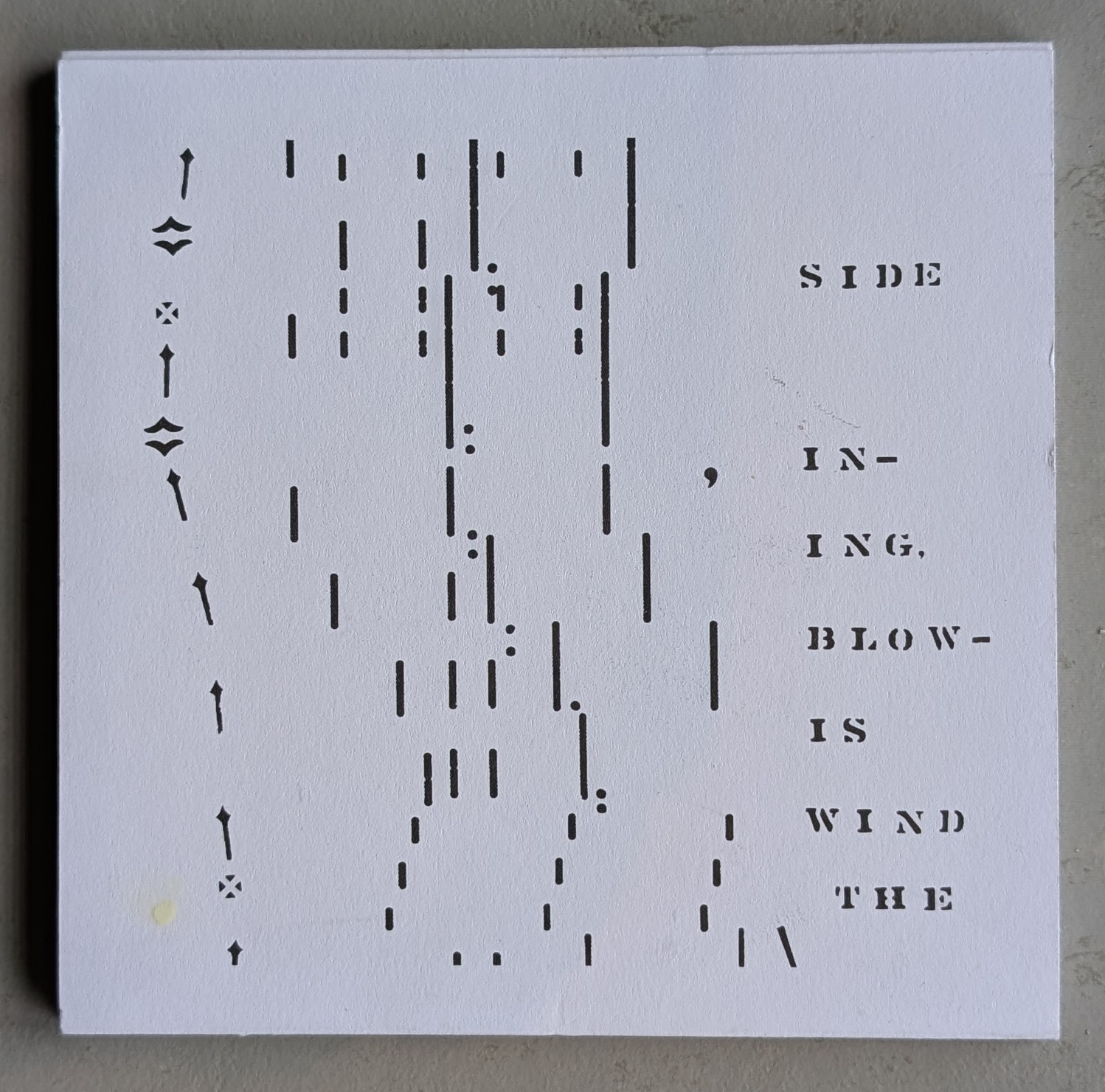
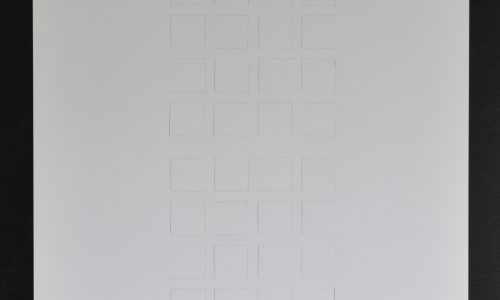
Similar to early versions of computer punch tape, player piano rolls use a unique machinic language made up of holes. Each perforation represents a specific note, triggering music without the need for a live performer. In Erica Baum’s photographs, the holes are captured as a series of dots and dashes, transforming these relics from the Edwardian era into something intriguing and unfamiliar. Through this subtle reframing, new layers of meaning are unlocked, just beyond our grasp. What language do they now convey to the human reader, rather than the pianola? These images possess an enigmatic quality akin to visual poetry, a puzzle of symbols and codes, even the cliched song lyrics – rising vertically on the page – transformed into fragmented and cryptic verses.
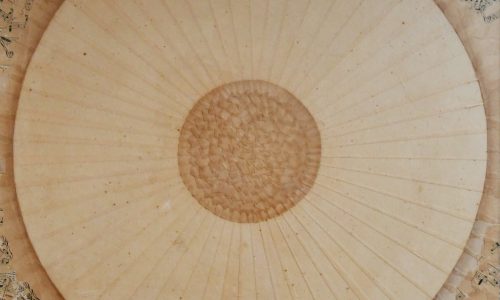
www.ftn-books.com has now a PIANO roll available.