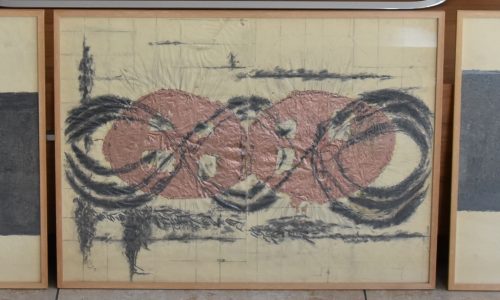
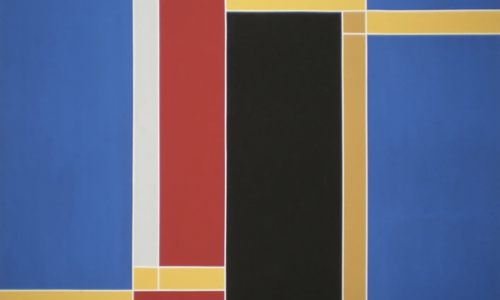
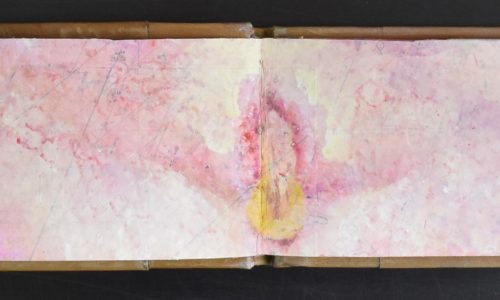
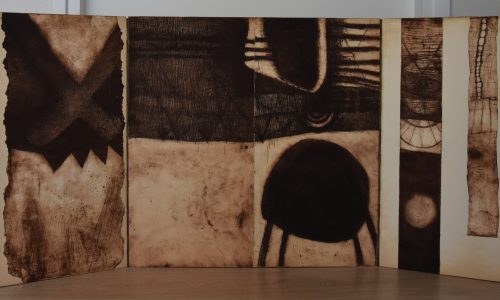
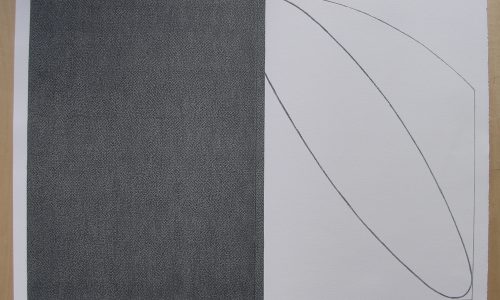
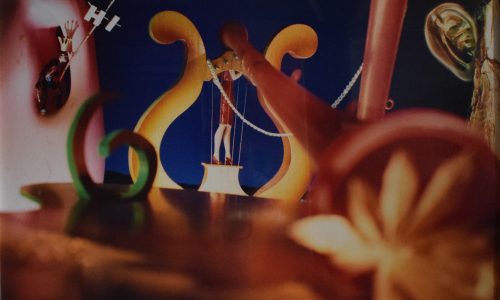
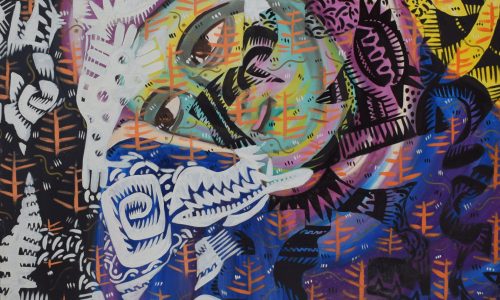
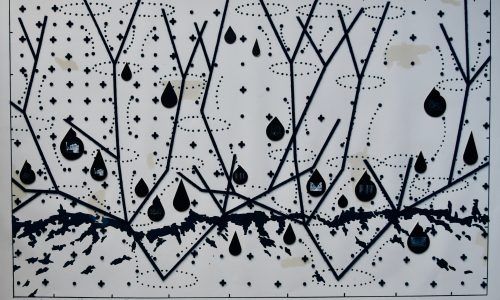
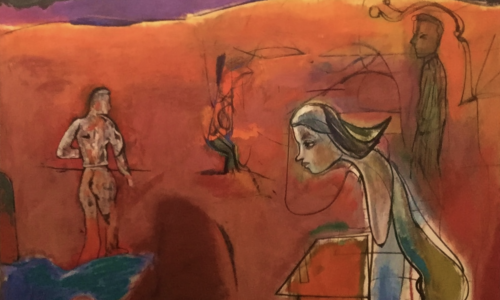
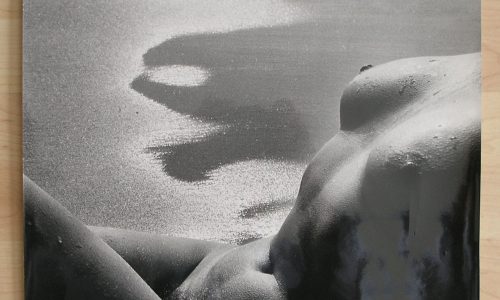
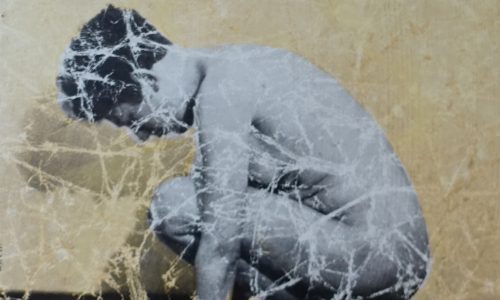
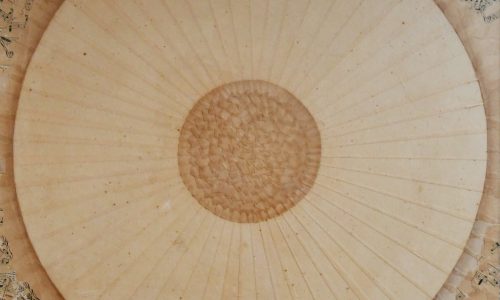
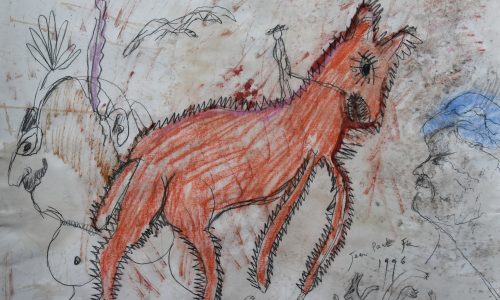
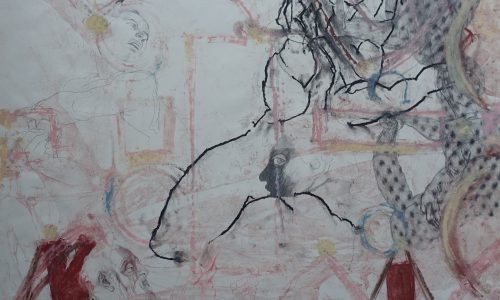
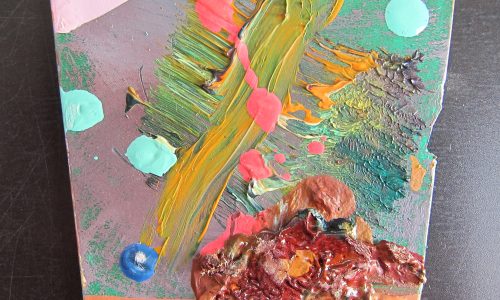
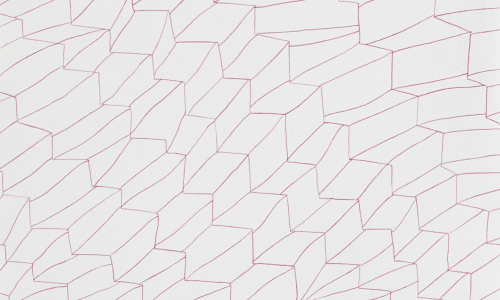
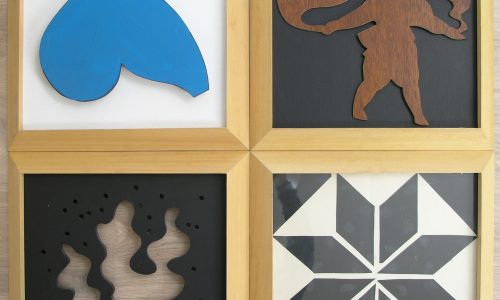
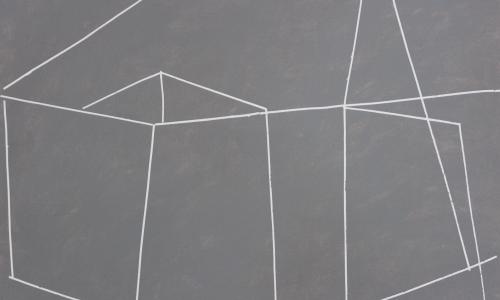
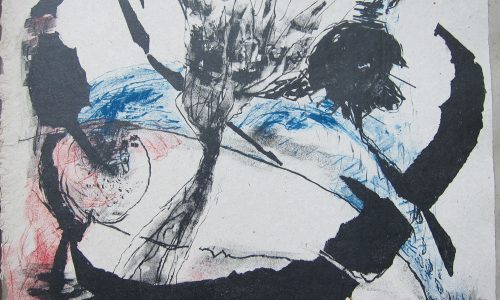
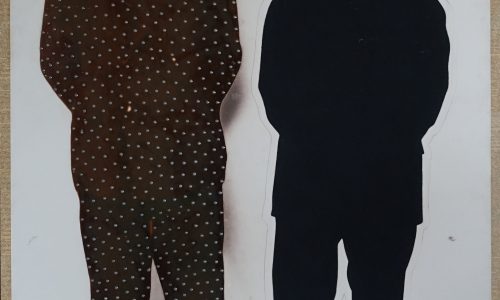
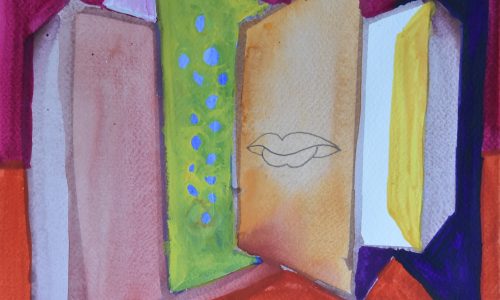
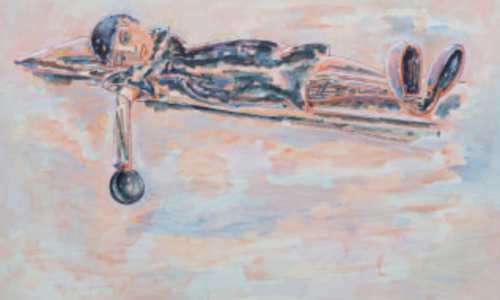
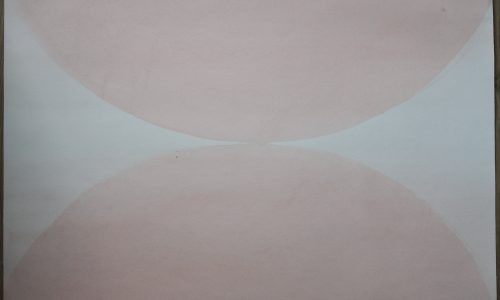
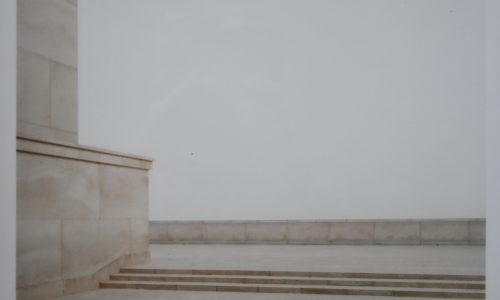
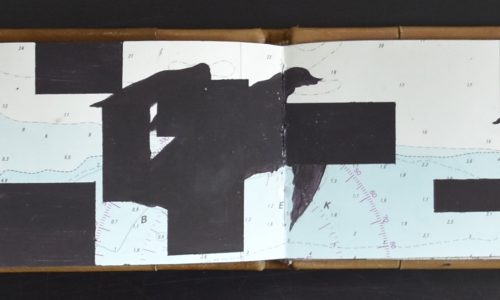
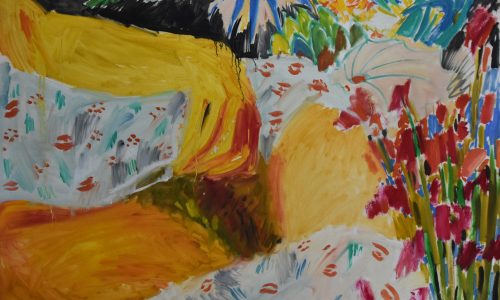
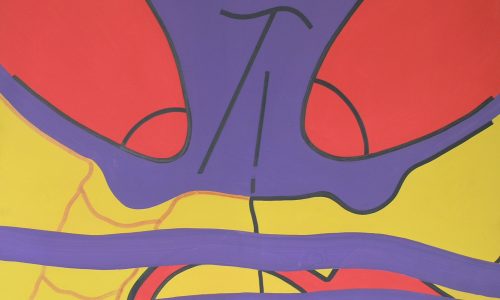
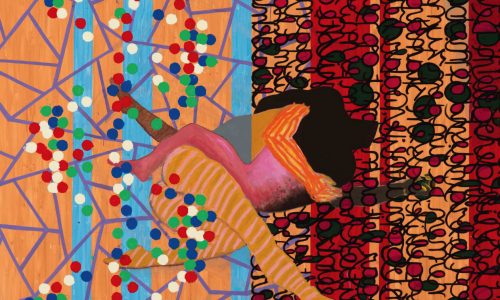
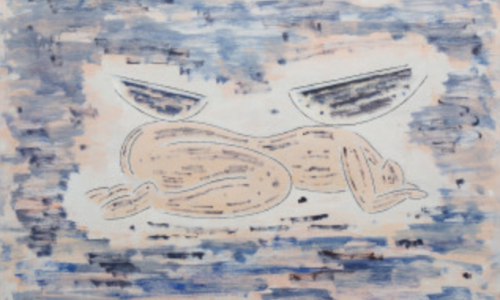
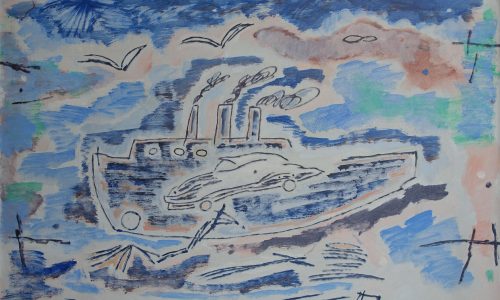
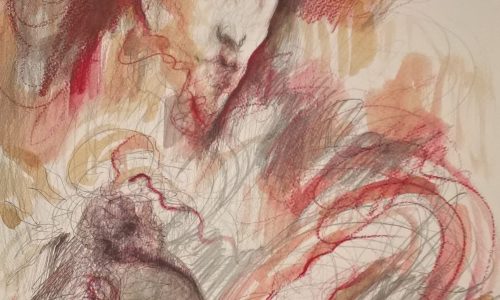
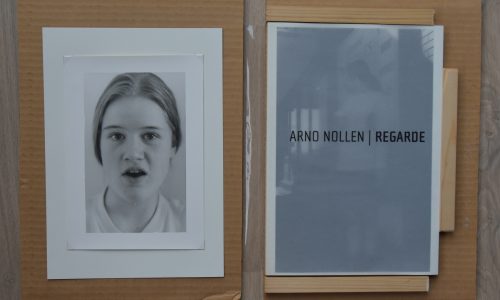
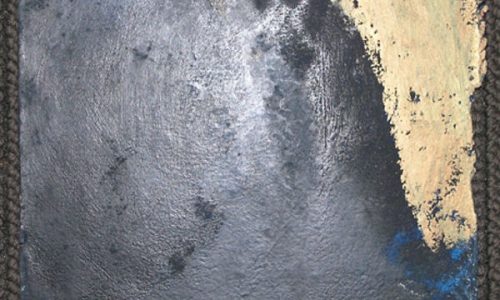
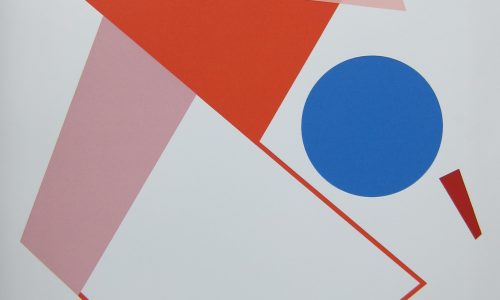
It was a pure coinsidence that i acquired this book on Jacqueline Böse, but leafing through it I noticed and started to appreciate the powerful abstract works. Colorful, abstract and in some cases minimal these paintings all could have been made nowadays. I am writing this in 2023 so in many cases over 35 years have passed nad almost al are still modern enough to convince. The book on Böse is now available at www.ftn-books.com
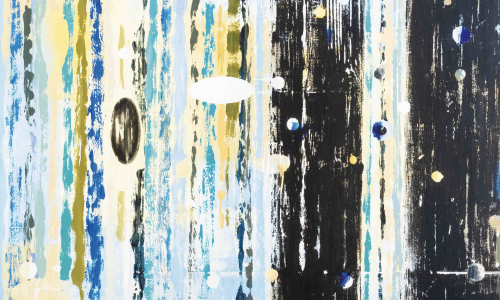
The works of the multifaceted Dutch artist Gijs van Lith alter the expectations and the customary understanding that a bystander generally has of what a painting can or should be. Analyzing the genesis of his creative act, van Lith is extremely close to what were the fundamental characters of action painting, also known as gestural abstraction or abstract expressionism: a style of painting in which color is spontaneously dripped, launched or stained on canvas, rather than applied carefully. The resulting work emphasizes the physical act of painting itself as in American Abstract Expressionism and in Tachisme, a pictorial style of abstract art which began in France in the 1940s and 1950s – otherwise known as Informal Art – in which the painting is conceived exclusively in its being made of gestures and raw material.
Gijs van Lith’s artistic research is mainly focused on painting but his body of works also includes sculptures and installations. The creative process, the choice of materials and the pictorial strategy – understood as modus operandi – play a fundamental role and are initially positioned as essential substrates for each new creation. Van Lith considers the canvas on which a painting is made as important as the material with which he paints it; and aspects such as materiality, the originality of the act, the relationship between gestural time and timelessness of the work, and the luminosity granted to the physicality of the painting, unquestionably cover all his work. His painting in recent years has acquired a more sculptural dimension, which allows him to create, develop and manage his work in an increasingly dynamic and materially more fluid way. The relationship between process and finished work becomes an interactive dialogue in which there is neither front or back.
Indeed, this is why before his works there is often a suspension of judgment due to a domineering pictorial haze or as he calls it “beast mode”, creative practice in which the artist feels more like an animal guided by his instinct and intuition. Van Lith does not discriminate between conscious actions and possibilities, between luck and deliberate gestures. The result is energetic and dynamic works that exist in a perpetually open dialogue between the conscious and subconscious.
Hreinn Friðfinnsson’s conceptual work has been characterized as poetic and playful, dealing often with storytelling, nature and time. It can be almost anything: a photograph, a story, a tracing, an atmosphere, a quasi-scientific experiment, a paint stirring stick or a secret. A split second up in the air between the years 1975 and 1976, one shoe searching for the other one to form a pair. His works are often structured around dualities and reversals. Both in form and content they are hard to pin down. The works remain in state of flux even after their conception, often older works are reused or expanded upon.
Born in 1943 in Baer Dölum, Iceland, Hreinn Friðfinnsson has been living in Amsterdam since 1971. He has exhibited internationally since the 1970s and had solo exhibitions at respected institutions such as the National Gallery (Reykjavík), the Serpentine Gallery (London) and Bergen Konsthall (Norway). In 2019-2020 a major retrospective To Catch a Fish with a Song: 1964-Today took place at KW Institute of Contemporary Art in Berlin and Centre d’Art Contemporain in Geneva. Amsterdam based venues such as Gallery 845 (1970’s), Galerie van Gelder (1990’s), Kunstverein (2015) and Eenwerk (2018) have hosted solo shows.
1971-72
The idea originated in the spring of 1971, but the gates were built in 1972. They were constructed in such a way that they would open when the wind blew from the south. They are situated in a remote place on the south coast of Iceland. The photos were taken on the day that the gates were installed. It was cold and rainy and the wind blew from the north. I have not seen them since. \
The scarce FIVE GATES FOR THE SOUTH WIND publication is now available at www.ftn-books.com
Born in 1905, the son of a militant miner in Bully-les-Mines, near Lens, Edouard Pignon had humble origins that stood him in good stead at the height of the French Communist Party’s prestige in the 1950s. He left his village for Paris in 1927, and worked in the Renault and Citroen car factories, attending evening classes at the Universite Ouvriere in painting and sculpture.
In 1931, when the effects of the Wall Street Crash were taking their toll on the French art market and depression loomed, he joined the Association des Ecrivains et des Artistes Revolutionnaires. Here, in the politicised climate of the Popular Front, which inspired Pignon’s 1936 Portrait of Robespierre, young autodidacts such he and his friend Boris Taslit … Displaying 750 of 5843 characters.
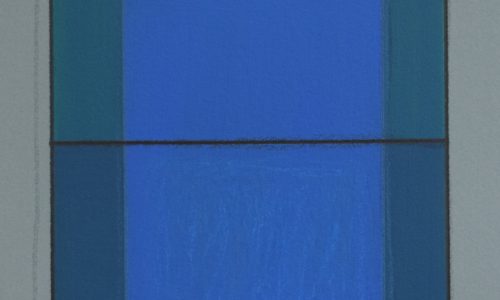
Peter Joseph had, over the course of decades, dedicated his practice to seeking the potential in constraint. He rose to critical acclaim in the 1970s for his meditative, two-colour paintings, which set one rectangle within a frame of a darker shade. These early works were characterised by perfect symmetry, where every decision about colour and proportion could be seen to be redolent of time, mood or place. While comparable to the work of Mark Rothko and Barnett Newman, Joseph’s was an anomalous strain of Minimalism: his allegiance lay as much with Renaissance masters as with his contemporaries. More recently his format had departed from his established ‘architecture’ to divide the canvas into two planes, horizontally or vertically, wherein loose brushwork, natural tones and patches of exposed canvas tap into new feeling. As Joseph said: ‘A painting must generate feeling otherwise it is dead’.
www.ftn-books.com has the Kent Fine art Inc. catalog now available.
Ian Whittlesea’s work has consistently been concerned with the intersection of language and space, using the lives, words and works of other artists as its source. He has been described as an artist of fascinatingly rigorous refinement and his work as a paradigm of concision and single-mindedness.
Collectively called Instruction Prints these works extend Whittlesea’s interest in the power of text to change the physical and psychic state of the viewer. Formally and conceptually they relate to the Statement Paintings that he made twenty-five years ago, but whereas those early paintings reproduced the didactic words of other artists the Instruction Prints use more generic and unattributed text. In their simplicity and directness they recall a parent’s instructions to a child, or perhaps the voice of a lover or a teacher. As with all of Whittlesea’s textual art they play on the tension between reading and looking, exploring the moment when language becomes object. As he has said of his earlier works:
When I first started making text paintings one of the important things was that it allowed me to side-step any debate about abstraction and representation. When you paint letters you are making the thing itself: as you paint a letter X you aren’t making a representation of a letter X, it just is the letter X.
www.ftn-books.com has the Marlborough catalog from 2013 available ( edition of 500 cps)
Readers know of my admiration for Willem Sandberg, who I can consider as one of the true geniuses of design. and ….typography. One who knows the series of publications on Typography : EXPERIMENTA TYPOGRAFICA, knows that he used these books to stretch the boundaries of typography, inventing in his own way a new series of fonts and designs. This series has been published over a period of some 10 years , making use of several publishers that supported the idea of the series. Andre Schwerz with Reflex and Galerie der Spiegel are among them. Some of these highly collectible titles are now available at www.ftn-books.com
Another resemblance. The slketch-like landscapes by Kees van Dongen vs the ones by Raoul Dufy. Almost the same period and both have the same feel . On the left van Dongen.
www.ftn-books.com has on both artists publications available.
Karl Otto Götz is one of the most important painters of the German Informel. His painting is non-representational, non-abstracting, not derived from nameable objects or landscapes. His painting is pure painting, quasi in its original state, fluid, spontaneous, expressive – without a depictive function or illusionistic depth effect. In the early 1950s Götz spreads his brush strokes and squeegee strokes completely freely, spontaneously and loosely over the canvas. Since 1954 his painting and squeegee rhythms follow certain pictorial schemes. These schemes are characterized by comparable divisions and rhythms, but can only be approximately named with words such as “vortex pictures,” “waterfalls,” or “grottos.” The speed of color application is extremely high. Instead of clearly delineated forms, the scraps of paint spatulaed and flung onto the canvas form transitions and interlocks everywhere beyond classical principles of form. He negates the constricting forms of the brushstroke of previous non-objective painting directions as well as the “cold abstraction” of constructed compositions. By exposing his artistic action very experimentally to the unreflective, spontaneous painting gesture, pouring the paint and distributing it with brushes or squeegees, he challenges the instantaneous happening.
www.ftn-books.com has several Gotz publications available. Among them one from the Kunsthof Vicht with a handwritten, signed and dedicated cover.
Kiki Smith was born in 1954 in Nuremberg, Germany. The daughter of American sculptor Tony Smith, Kiki Smith grew up in New Jersey. As a young girl, one of Smith’s first experiences with art was helping her father make cardboard models for his geometric sculptures. This training in formalist systems, combined with her upbringing in the Catholic Church, would later resurface in Smith’s evocative sculptures, drawings, and prints. The recurrent subject matter in Smith’s work has been the body as a receptacle for knowledge, belief, and storytelling.
In the 1980s, Smith literally turned the figurative tradition in sculpture inside out, creating objects and drawings based on organs, cellular forms, and the human nervous system. This body of work evolved to incorporate animals, domestic objects, and narrative tropes from classical mythology and folk tales. Life, death, and resurrection are thematic signposts in many of Smith’s installations and sculptures. In several of her pieces, including Lying with the Wolf, Wearing the Skin, and Rapture, Smith takes as her inspiration the life of St. Genevieve, the patron saint of Paris. Portrayed communing with a wolf, taking shelter with its pelt, and being born from its womb, Smith’s character of Genevieve embodies the complex, symbolic relationships between humans and animals.
Smith received the Skowhegan Medal for Sculpture in 2000, the Athena Award for Excellence in Printmaking from the Rhode Island School of Design in 2005, the fiftieth Edward MacDowell Medal from the MacDowell Colony in 2009, and has participated in the Whitney Biennial three times in the past decade. In 2005, Smith was elected to the American Academy of Arts and Letters. Smith’s work is in numerous prominent museum collections, including the Museum of Modern Art, New York; Walker Art Center, Minneapolis; Whitney Museum of American Art, New York; Solomon R. Guggenheim Museum, New York; the Metropolitan Museum of Art, New York; and the Museum of Contemporary Art, Los Angeles. Smith lives and works in New York City.
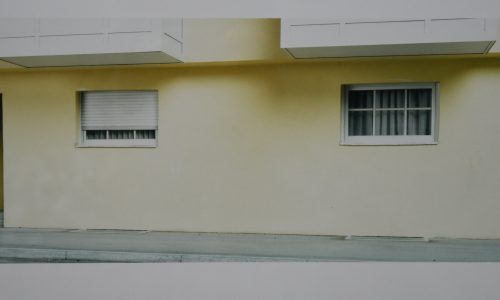
Artist/ Author: Oliver Boberg
Title : Memorial
Publisher: Oliver Boberg
Measurements: Frame measures 51 x 42 cm. original C print is 35 x 25 cm.
Condition: mint
signed by Oliver Boberg in pen and numbered 14/20 from an edition of 20