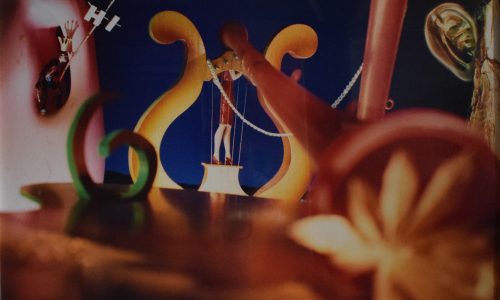
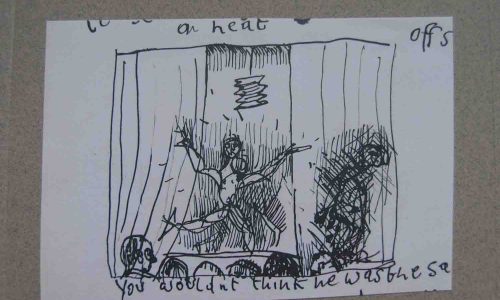
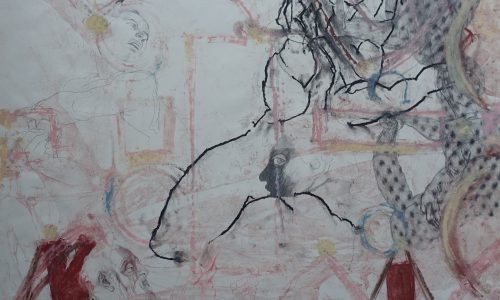
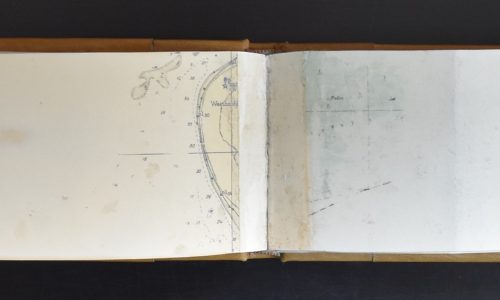
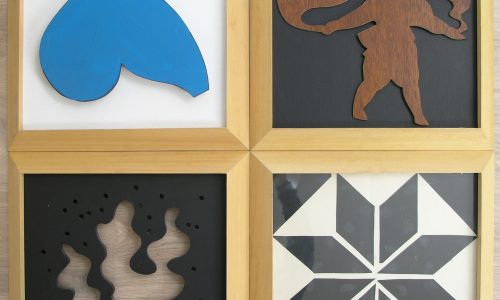
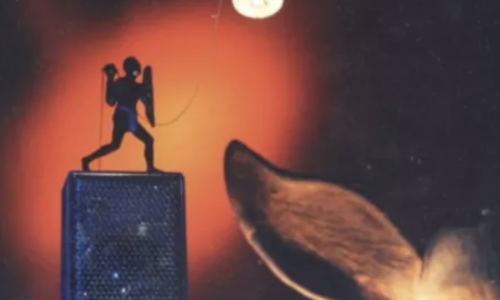
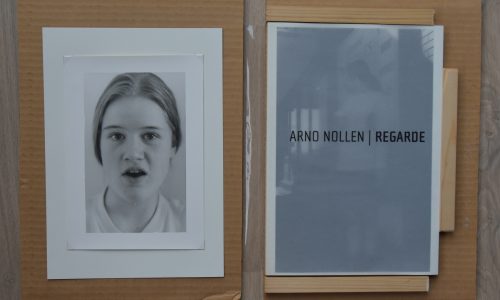
BEWTH stands for Bewegingstheater. The group existed from 1967 until 2003 and at one time I witnessed a special p[performance they made in the entrance hall and rooms of the Haags Gemeentemuseum. Because of their movements in the building itself they made the spectator aware of the beauty of the architecture and made you discover the surroundings once again. Transforming the building into a large stage on and in which they performed. The catalogue which is now for sale at www.ftn-books.com is for their performance at the BEELDEN AAN ZEE museum. The same idea …using the building and the sculptures as a stage. Fascinating and unfortunate they stopped their performances in 2003.
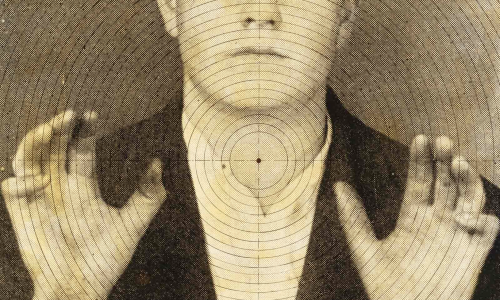
German photographer Klaus Mettig–who was born in Brandenburg in 1950–has traveled continually since 1973, making photographs that convey an indeterminate sense of time, place and culture. Portraits of people, landscapes and cityscapes tell a story, but one that is difficult to pin down. “Trust You Equal Love (Lions)” (2004), is a black-and-white portrait of two men walking down an anonymous urban street in front of a giant skull graffitied on a wall. It is uncertain if the subject of the photograph is the people or the background. Mettig also often collaborates with his longtime partner, Katharina Sieverding. “Motorkamera I-VIII” (1973-74), consists of 386 black-and-white photo-booth images of the couple in drag, with Mettig becoming progressively femme and Sieverding progressively butch. In Don’t Be Left Behind, Mettig continues in this vein, exploring several Asian cities through panoramas and portraits.
……… But the van Abbemuseum book from 1982 contains over 300 prints of German television. What makes this stand out is that Mettig invented the “screenprint” for television making this project original and far ahead of its time. The book is available at www.ftn-books.com
Gérard Fromanger was born in 1939. His father, from an artistic family, was an amateur painter. The child, from a very young age, paints and draws. Fromanger will only make brief studies (Grande-Chaumiere, Beaux-Arts, Paris). He follows courses organized by the city of Paris. He becomes friends with the sculptor César, with Jacques Prévert and with the Giacometti brothers. In his first period, the artist produces several figurative compositions ranging from gray to clear-obscure earth tones. He draws and becomes interested in lithography. Quickly, Fromanger changes his style; practicing painting with contrasting flat tints. He participates in the adventure of the Nouvelle Figuration (New Figuration) and imposes himself in the 60’s as one of the personalities of the Parisian artistic scene. The artist participates from 1964, and for a long time afterwards, in the collective exhibitions (Salon de Mai, Salon de la Jeune Peinture, Salon Grands and Jeunes d’Aujourd’hui, etc.) in which he obtains important prizes. Some solo exhibitions are organized in his name (Grenoble, Namur, Paris, Sienne, etc.). In 1968, where the general ambiance is the contestation of the social issue of the student generation, Fromanger co-founds the Atelier of Beaux-Arts that will produce thousands of posters. He shoots film tracts with Jean-Luc Godard. The artist has the habit of producing in series. He produces the sculptures ‘environmental’, creates costumes and sets for the ballet. Fromanger progressively moves away from the sociological topics that for a long time motivate his pictorial activity in aid of a creation specifically plastic or intended to be so. From a not long ago military pictorial activity, the artist passes onto an individual and hedonistic conception; there are from now on the pleasure of shadows, forms and colors. He divides his time between Sienne and Paris.
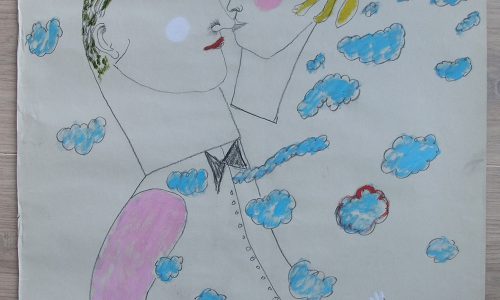
And the final blog on van Hemert until there is another addition to our collection. Here is another pastel drawing from 1988. A delicate pink, green and grey makes this one stand out from the other drawings. Drawing is from 1988 too.
For information on all these drawings and other Frank van Hemert related material at www.ftn-books.com, please inquire at wilfriedvandenelshout@gmail.com
From 1980 till 1982 he studied at Atelier 63 in Haarlem. In the early 80’s he was discovered as a young talent and received an invitation from the curator Rudi Fuchs to Documenta 7 in Kassel.
His works are represented in numerous museums, private and public collections. The versatility of his work, both on the canvas and on paper, speaks from many comprehensive series on the major themes of life.
Another from the recently acquired series of Pastel drawings by Frank van Hemert. This from 1988
Through my paintings and drawings I make a connection with myself and the other. The best I can achieve is that my paintings and drawings inspire the other to make a connection with themselves
Frank van Hemert
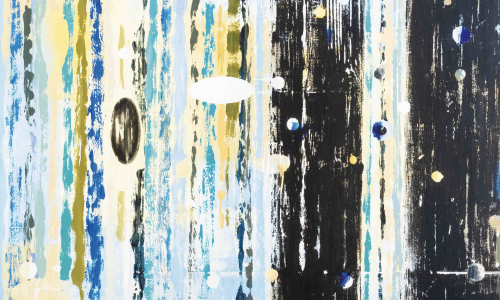
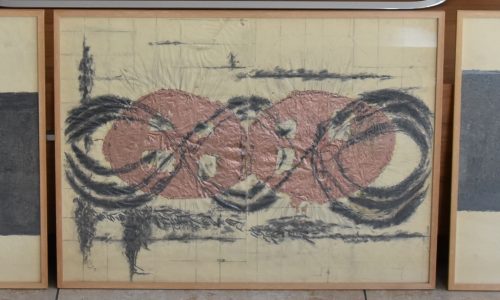
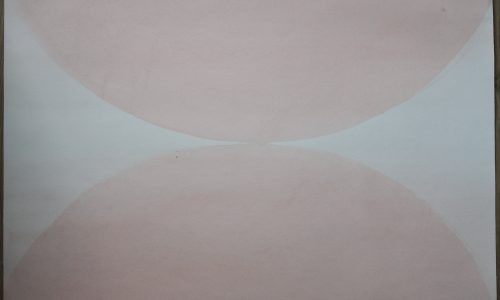
Yesterday is atrted with the short series of blogs on Frank van Hemert. The occasion . ….I acquired a small series of late Eighties pastel drawings which I examined now out of the frames. Today an almost square with purple and black balls ” untitled” from 1988
Frank van Hemert exhibition at the Gemeentemuseum Den Haag
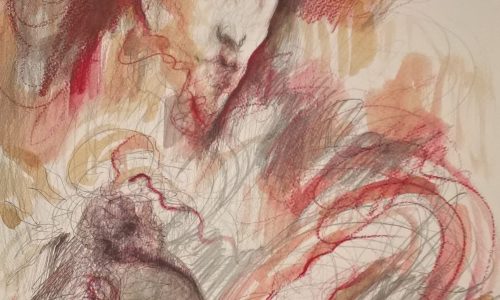
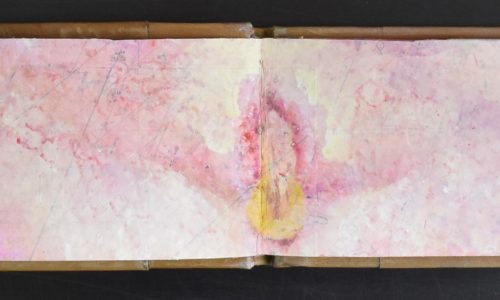
Today i have finished examining the series of Frank van Hemert pastel drawings I recently acquired. Examined them out of the frame. Photographed these without the glass protection and removed them from their backing board. Fresh pH free double sided tape and because I removed them, I had the chance to make the photographs. An impressive and beautiful series of which I will share in the coming days all pastel on paper drawings. Show the front, back and details.
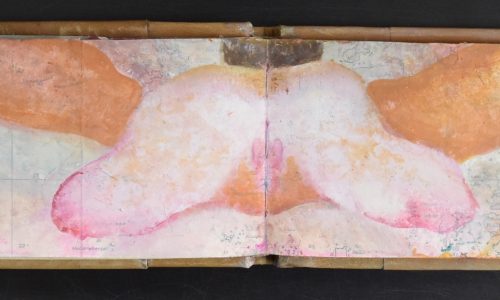
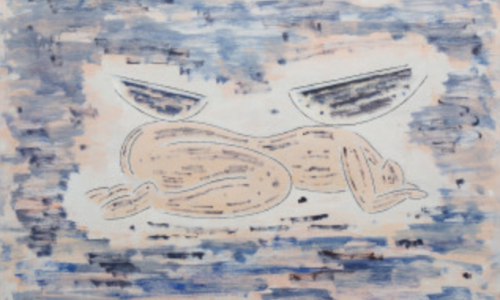
First is ” BED” a pastel in red , white and black from 1987 which reminded me of the bed from the Frits Becht collection which was on show in the Nineties at the Gemeentemuseum Den Haag ( see picture above)
There are several Frank van Hemert publications now available at www.ftn-books.com
Yesterdays blog was devoted to Josef Albers and today it is time to focus on Anni Albers. Forced into weaving at the BAuhaus she has become one of the leading female artists of last century with her textile art.
For those not planning to go….. You will not be disappointed when you see these yourself…..enjoy.
Last week we visited the Josef and Anni Albers exhibition at the KUNSTMUSEUM ( Gemeentemuseum Den Haag). An absolute must visit for those interested in the Bauhaus and the Albers family. The highlight of the show was for me personally the last painting ever by Josef Albers, but the textiles by Anni Albers were the revelation. It is a once in a lifetime presentation and an absolute must visit for those interested in Modern Art and Minimalism. I have taken many photographs , but want to share in this and tomorrow’s blog some of the most important ones……and of course for publications on both artists visit www.ftn-books.com
The last finished painting by Albers
Tomorrow a series of Anni Albers at the KUNSTMUSEUM
First time i heard about Herold is when Rudi Fuchs introduced this artist at the Stedelijk Museum in 1993. With it came one of the most appealing catalogues from the 90’s.
Gracia Lebbink signed for the design of the catalogue, making it simple and informative, but still it has the signature of a great designed catalogue. This catalogue is now available at www.ftn-books.com
Georg Herold is a sculptor, painter, photographer, video and installation artist. He completed an apprenticeship as an artist’s blacksmith and was educated at the art academy in Halle. In 1974 he left the GDR and attended the Academy of Fine Arts in Munich for two years. He then went to Hamburg, where he graduated from the University of Fine Arts under the supervision of Sigmar Polke.
With a number of others he formed a close-knit group of “provocateurs”, also called enfants terribles or a bad boy group, who embraced the punk movement and flourished in the anarchist spirit of the late 1970s.
Throughout the 1980s and 1990s, Herold was influenced by the work of Albrecht Dürer and the Dada movement. A number of works “allude” to this or are “idiosyncratic provocation”. The ironic tendency of his work leaves room for interpretation. Characteristic of that period of his work is, ‘There is nothing more – There is no law’ (1992).
Georg Herold’s work is experimental and daring. For example, he uses cheap, often second-hand materials traditionally associated with construction, household, clothing and edible purposes. This led to his objects being compared to the Arte Povera. On closer examination, the influence of Joseph Beuys is evident, echoed in Herold’s approach and discussion of political, social and cultural paradigms. There are many references to language and art history in his work.
Blühendes Leben (2009) was the title of Herold’s work that was shown at ART ZUID in 2011. A pink dancer made of slats, screws, wire, canvas and lacquer, resembles a parody of a common title for kitsch paintings. The maker surprises the viewer, who has to decide for himself whether the pose is seductive or not.
Herold had many solo exhibitions in leading museums in Europe and beyond. Since 1999 he has been a professor at the prestigious Kunstakademie Düsseldorf.
Artist/ Author: Oliver Boberg
Title : Memorial
Publisher: Oliver Boberg
Measurements: Frame measures 51 x 42 cm. original C print is 35 x 25 cm.
Condition: mint
signed by Oliver Boberg in pen and numbered 14/20 from an edition of 20