Posted on 4 Comments

Jean Amado (1922-1995)

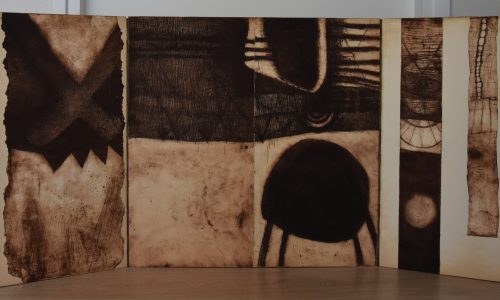
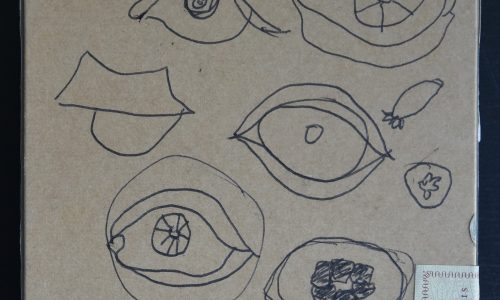
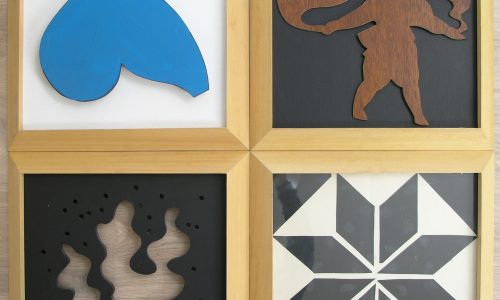
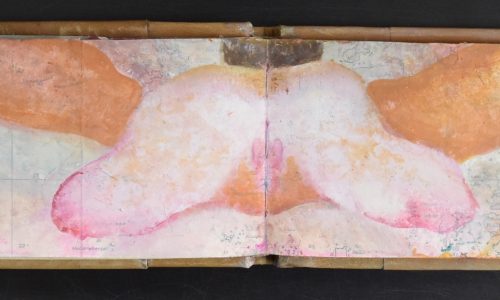
The sculptor, native of Aix en Provence, friend of Jean Dubuffet, was regularly exhibited between 19760 and 1990., But since it looks like he is forgotten by most.

His works in basalt sand, fireproof cement and water offer a synthesis of sculptural elements and architecture. Following his first exhibition at the gallery followed by the promotion of his works in Oslo, the French State acquired La tatoue démolie. Thereafter monumental pieces joined major collections of foreign institutions, Rosenberg at the Darmstadt Museum and Par la mer, le passage at the Kröller-Müller of Otterlo. The latest is from 1980 at which year he had a large solo exhibition at the museum. www.ftn-books.com sells a complete photo press set, including Amado at work at the museum and has the Amado book which was published with the exhibition for sale too.

AMADO catalogue
Amado catalogue inside

Posted on 10 Comments

Sonsbeek 1972

the 3 volume catalogue for Sonsbeek 1972

This arguably the most important Sonsbeek presentation ever. Artist like Serra, Brouwn, Andre and LeWitt all participated in the park near Arnhem. I now have acquired the complete set of 3 volumes which was published on the occasion of this outdoor exhibition.

Arnhem, Holland: Sonsbeek Festival, 1972
Three volumes (A – H, I – R,  S- Z) , uniformly 13 x 17.5cm with a total of almost 1,000 pages.

The extensive catalogue for the huge (and four yearly) sculpture show that frequently catches each the zeitgeist perfectly (the 1968 earlier show represented the pop artists and before that Klein and Arman etc) .

Each artist is displayed in a standard format – a full page b/w of the work followed by a faux index card description in Dutch and English – most artists displayed more than a single work. Artists include Andre, Brouwn (mispelled Brown!), Buren, Darboven, Flanagan, Graham, Long, Merz, Oppenheim, Serra, Snow and many, many more. A delightful publication which is well designed and all that a catalogue should be. 

available at www.ftn-books.com

Cart Andre at Sonsbeek 1972

Posted on 2 Comments

Gerald van der Kaap (continued)

Gerald van der Kaap

Readers of this blog have already encountered  a short text on Gerald van der Kaap, but since i have added last week an important publication by van der Kaap to my inventory it is necessary to write agin.

The publication was published by Bébert in 1983, in an edition of 26 + 10 numbered and signed copies. It was presented for the first time at galerie Jurka in 1983 and it contains 6 original photographs by van der Kaap. Many Rotterdam artist experimented with staged photography ( Henk Tas ao) and so did van der Kaap and because i have an interest in staged photography i decided to buy the portfolio for my inventory ( now available at www.ftn-books.com). Of course you need to know what i am writing about so here is the complete portfolio in photographs. 

Kaap invitation for the galerie Jurka presentation

Posted on 3 Comments

Allie van Altena (1952)

For this blog a different approack. I stumbled upon a catalogie by van Altena of his 1990 galerie Ronkes Agerbeek and realized that his career spans over 40 years now and specially his drawings always fascinate me. So whie looking for information on Altena i found his site with a virtual visist to his studio. The book is available at www.ftn-books.com, but pleazse visit this studio first. Great art art and a nice change this time.
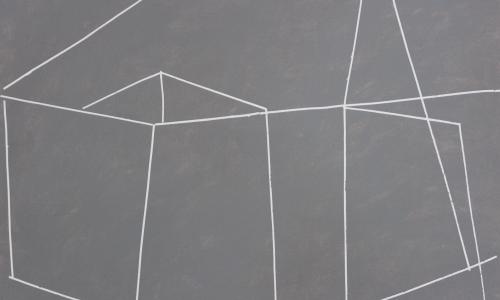
https://www.allievanaltena.nl

van Altena publication for galerie Ronkes Agerbeek
Posted on 3 Comments

Hans van Manen (1932)

When you search for Hans van Manen you will find 9 out of 10 times that he is one of the most influential choreographers from our time. He had a lilfe time career with the ” Nationaal Ballet”, but search a little bit more you wioll find a very talented photographer. He started with photography in the early Eighties and was at that time very much influenced by Robert Mapplethorpe and photographs from these days show many resemblances. Later he met Erwin Olaf and they both admired each others works and photographed each other on many occasions.

 This career in photography is still far less important than his career with the Nationaal Ballet, but i would not be surprised if van Manen would become much more famous for his photographs by a far larger audience than with his ballets.

Although the ballets by Hans van Manen (Amsterdam, 1932) seem simple by their abstraction, they are certainly not. The award-winning choreographer requires risk, vitality and swing. He owes his nickname Mondriaan of Dance to the optimal use of space and a clear introduction of the dancers on stage. His humor lifts the tone of his work and appeals to a large audience. Although Van Manen cannot read scores, he ‘reads’ compositions and ‘listens’ to dance like no other.

In 1951 Van Manen started his career with Sonia Gaskell’s Ballet Recital. The year after, he joined the Nederlandse Opera Ballet, where he choreographed his first work Feestgericht (1957). Then he joined Roland Petit’s company in Paris. From 1960 to 1971 Van Manen was associated with NDT as a dancer (until 1963), choreographer and (from 1961) as artistic leader. In this period Van Manen blossomed as a choreographer. In 1973 he joined Het Nationale Ballet as a choreographer and producer, after two years of freelancing.

From 1988 to 2003 Hans van Manen returned to NDT as a resident choreographer. He remains available to NDT for rehearsing and updating existing repertoire. His oeuvre now comprises more than 120 ballets (62 of which for NDT), each bearing his unmistakable signature. His most recent creations for NDT are Short Cut (NDT 1, 1999), Two Gold Variations (NDT 1, 1999), Trilogie (NDT 1, 2000), Two Faces (NDT3, 2000), Simple Things (NDT2, 2001) and Monologue, Dialogue (NDT 1, 2003). Hans van Manen created Situation especially for the company in 1970. The ballet returns in the NDT 1 program Soir Historique (2019).

from left to right : photo’s by Mapplethorpe, Erwin Olaf and Erwin Olaf

Posted on 14 Comments

Walter Jacob (1893-1964)

Walter Jacob during WWI

In 1910, Walter Jacob (1893-1964) started training in decorative painting in Meerane, where he met Ernst Müller-Gräfe, who would be influential for Jacob’s artistic development.  In his early work, he created especially drawings, resulting from a lack of money.  After the First World War, Jacob was a student at the Dresden Academy and in contact with Robert Sterl, whose master student he was from 1919-20. 
Jacob is not very well known, but one look at his work and you can not only date it it as typical for the Interbellum, but you also can see that this is great German Expressionist art. It took some decades for him to be recognized as being of importance but finally in 1986 a special auction at Karl & Faber was devoted to him and his works. This catalogue and poster are now available at www.ftn-books.com

Posted on 2 Comments

August Sander (1876-1964)

August Sander

Sander developed an interest in photography through work in photographic firms in Berlin, Magdeburg, Halle and Dresden, Germany, 1898-1899. In 1901, went to Linz, Germany, where he first worked in Greif Studio, which he ran from 1902 to 1904 with his partner Franz Stukenberg as the Studio Sander & Stukenberg. Founded the Studio August Sander für Kunstphotographie und Malerei, 1904. Sold the studio in 1909 and returned to Cologne, Germany, where he ran the Studio Blumberg & Hermann. Founded his own studio in Lindenthal, Germany, 1910. In 1910 started his major project, “Menschen des 20. Jahrhunderts”, with which he was involved until the 1950s with an interruption between 1933 and 1939. “Menschen des 20. Jahrhunderts” was published in Munich in 1980. Worked mainly on the themes of the Rhine countryside and the city of Cologne, 1933-1939. These photographs were published in book form in 1975. After the demolition of his studio by bombing in 1944, retired to Kuchhausen in Westerwald, Germany, where he carried on his work. Honorary member, Deutsche Gesellschaft für Photographie, 1961. www.ftn-books.com has the Phillips publication from 2004 on the Geman Landscape series available.

Posted on 2 Comments

Rik Poot (1924-2006)

Rik Poot (Vilvoorde, March 20, 1924 – Jette, December 16, 2006) was a Flemish visual artist who mainly focused on bronze sculptures and assemblages in metal.

He was born in the Flemish part of Brabant, more specifically in the working-class neighborhood Far-West, the first social residential area of ​​the municipality of Vilvoorde. Poot attended the modern humanities at the Royal Athenaeum in Vilvoorde and then took lessons at the Academy of Molenbeek. As a child, Poot became fascinated by the craftsmanship of his father, who was a bronze caster and made funerary ornaments. The fairs in Vilvoorde, especially the horses that were inspected and traded, made a lasting impression on him. During the war years 1944-45 he studied at the Royal Academy of Fine Arts in Brussels. In 1948 he settled in Grimbergen. Poot has successively received several prizes: First Prize Open Air Exhibition Anderlecht (1948), the Godecharle Prize and the prize of the city of Liège (1949). He then undertook study trips to France and Italy thanks to a scholarship won to study the art of Antiquity and the Renaissance. In 1953 he won the second Prize of Rome, the first Prize Open Air Exhibition Forest and the first Prize City of Brussels. In 1954, together with Roel D’Haese, he received an honorable mention in the Prix Jeune Sculpture. In 1959 he received the Coopal Prize. From 1962 to 1984 he was professor of Monumental Sculpture at the National Institute of Architecture and Decorative Arts of ter Kameren, Brussels. Poot’s statues are almost all in public space. His Resting Najade is located in front of the Turnhout courthouse. In 1982 he designed “Ode to a mountain river” in bronze for the Herrmann-Debroux metro station in Brussels. His statue of the writer Maurice Gilliams was given a place in the garden of the Elzenveld in Antwerp. On the bluestone pedestal is this text by Gilliams: The unrest gives wings to the imagination, which became the motto of the novel The evening is discomfort by Marieke Lucas Rijneveld. In 2004 the city of Vilvoorde organized an exhibition of his work in the Hansenspark and an old monastery as a tribute to Poot. Here they brought together the voluptuous figures, the prancing horses, the monumental statues and the busts that Poot had made. In the spring of 2008, Poot’s latest creation, The Kidnapping of Europe, was created on the Leuven provincial square, with the support of the province of Flemish Brabant, the city of Leuven and KBC. The bronze statue forms the final piece of the esplanade that will connect the station with the provincial government. The statue depicts the Greek myth of Europe on the back of a bull. Shortly afterwards, he posthumously received the biennial Van Acker Prize for his entire oeuvre in Bruges.

www.ftn-books.com has the Belgisches Haus from 1970 available.

Rik Poot

Posted on 1 Comment

Farhad Farzaliyev (1989)

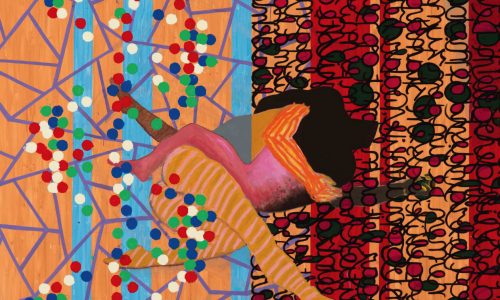
Farhad Farzaliyev was born in Baku, Azerbaijan in 1989. Farhad completed an MFA with distinction at the Azerbaijan State Academy of Fine Arts in Baku in 2012. Farhad works predominantly in the medium of installations, but also paintings, graphics, photography and sound. He is member of Artists Union of Azerbaijan since 2011 and member of Yay Gallery of the YARAT Contemporary Art Space since 2013. He has participated a large number of group exhibitions around the world. He is represented in the collection of the Museum of Modern Art in Baku. Farhad Farzaliyev lives and works in Baku.

Some of Farhad’s recent work, the Granny’s Vocabulary series from 2014, considers nostalgia for the Soviet era, combining rudimentary Soviet textiles with neon slogans from his grandparents generation. Using Cyrillic script, which was replaced by Turkic script after independence in 1991, his work immediately speaks of the pre-independence era of Soviet rule and the tumultuous history of Azerbaijani script, which has changed officially three times in the last seventy years.

Farzaliyev has featured in many exhibitions in his native Baku, and a growing number around the world including Russian and Germany.

So far the info i have found on this artist who i compared to Craig Martin when visiting the portrait exhibition at the Fries Muzeum.. This coloring plate was at the entrance available and i thought it an original multiple tom collect. The coloring plate is now available at www.ftn-books.com

This image has an empty alt attribute; its file name is kleurplaat-Farzaliyev--1024x731.jpg
Posted on 3 Comments

Siep van den Berg / Ultimate edition

the year 1984… Siep van den Berg received several one man exhibitions ao at the Haags Gemeentemuseum. A few months before that exhibition a special publication was published by LA FONTAINE DU PEUCH. Text by Prof. Jaffé, who died shortly before the book was finished and published. The edition is only 54 copies all signed and numbered by Siep van den Berg. Measuring an impressive 51 x 41 cm. and containing beside poems , tipped in off set prints, 2 original signed and numbered silkscreen prints and 2 collage works mounted on paper. The cover is a composition by Siep van den Berg executed in laminated paper. Overall 40 pages, red binding papers and linnen cover . It is an absolute must have for the Siep van den Berg admirer, but to make it available for all i have photographed all pages from front to backcover to give the presentation of this epic work to all. The book is now availabel at www.ftn-books.com