Posted on 4 Comments

Minimal Art at the Haags Gemeentemuseum in 1968/1969/1970

Schermafbeelding 2021-04-22 om 13.47.55

The Haags Gemeentemuseum was the very first to present Minimal Art outside the United States. The curator responsible for this important initiative was Enno Develing, who started to introduce the key artists of this important movement in art.

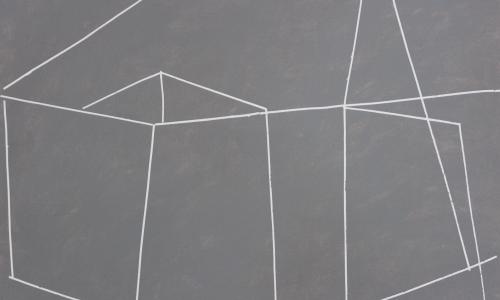
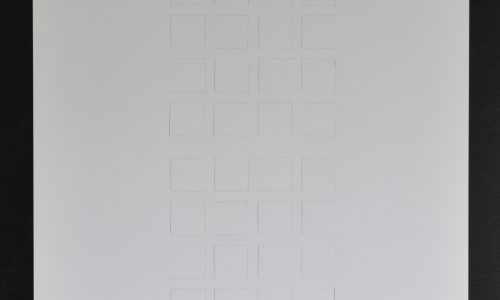
Minimal Art, a new American movement based on the use of simple geometrical shapes. The exhibition featured large sculptures designed by American artists like Carl Andre, Sol LeWitt and Donald Judd but generally constructed by the museum carpenters. These artists thought that the idea behind the artwork was the most important thing. Its execution could be left to someone else. This constituted a radical break with the past and a direct attack on the centuries-old belief in the artist as an individual genius. At the show in The Hague, the ‘minimalists’ exhibited a cool, impersonal kind of art with no external references or symbolic meaning. Over the next few months, the Berlage Cabinet will contain a display of works on paper by these iconic artists.

The exhibits show that the work of the minimalists was by no means confined to sterile geometric abstractionism. They include Sol Lewitt’s carefully documented tears in sheets of paper, a typewriter poem by Carl Andre and examples of work by Lawrence Weiner, in which the execution of the idea is not necessarily essential and where language assumes the functions of sculpture.

Right from the start, the term ‘Minimal Art’ was controversial. Various artists objected to it because they felt it did not cover the work they were doing. The term may indeed have been too limited but it did reflect a collective attempt to use a process of reduction to get at what was essential in art. That was the foundation on which the artists concerned built a new kind of art and made themselves a major source of inspiration for later generations. Because the movement viewed the idea as the artwork and acknowledged the possibility than someone other than the artist could execute it, Minimal Art was to become one of the taproots of Conceptual Art.

The Minimal Art exhibition of 1968 was put together by Enno Develing (1933-1999). As a research assistant at the museum, Develing took a keen professional interest in the movement and brought a number of its exponents to The Hague. They included Dan Flavin, Donald Judd, Robert Morris, Robert Smithson and Sol LeWitt. The Minimal Art exhibition was followed in 1969 and 1970 by solo shows by Carl Andre and Sol LeWitt, with whom Develing was personally friendly. The Gemeentemuseum Den Haag was an obvious place to exhibit Minimal Art. After all, the minimalists were working in the tradition of twentieth-century geometrical abstractionism established by Mondrian and their work formed a perfect complement to the architecture of Berlage. It was not for nothing that Sol Lewitt felt that the Gemeentemuseum Den Haag was the finest museum building in the world.

It is now for the very first time that www.ftn-books.com has all the catalogues published by the Haags Gemeentemuseum physically available.

Posted on 2 Comments

John Szarkowski (1925-2007)

Schermafbeelding 2021-09-08 om 13.58.26

Perhaps Szarkowski was more know for being curator at MOMA then for being one of the greatest photographers from last century.  Here is part of the text the Guardian place shortly after he had passed away.

Szarkowski was a good photographer, a great critic and an extraordinary curator. One could argue that he was the single most important force in American post-war photography.

Schermafbeelding 2021-09-08 om 14.00.10

Like all good critics and curators, Szarkowski was both visionary and catalyst. When he succeeded the esteemed photographer Edward Steichen as director of the Museum of Modern Art in New York in 1962, he was just 36, and must have been acutely aware of the long shadow cast by his predecessor. Steichen had curated the monumental group exhibition, The Family of Man, at Moma in 1955, which he described as ‘the culmination of his career”. Featuring 503 images by 273 photographers, famous and unknown, it had aimed to show the universality of human experience: death, love, childhood. The show had drawn huge crowds to the gallery and then toured the world, attracting an estimated 9 million viewers.

It was, as Steichen had no doubt intended, a hard act to follow. “We were different people”, Szarkowski later said, “with different talents, characters, limitations, histories, problems and axes to grind. We held the same job at very different times, which means that it was not really the same job.”

More revealingly, Szarkowski also said that Steichen and his predecessor, Beaumont Newhall, “consciously or otherwise, felt more compelled than I to be advocates for photography, whereas I – largely because of their work – could assume a more analytic, less apostolic attitude.” That difference in approach would prove to be a crucial one, and it underpinned a new photographic aesthetic that continues to shape our view of the world to this day.

When Szarkowski took over at Moma, there was not a single commercial gallery exhibiting photography in New York and, despite Steichen and Newhall’s pioneering work, the form had still not been accepted by most curators or critics. Szarkowski changed all that. He was the right person in the right place at the right time: a forward thinker who was given control of a major art institution at a moment when his democratic vision chimed with the rapidly changing cultural tastes of the time.

Szarkowski insisted on the democracy of the image, whether it be a formally composed Ansel Adams landscape, a snatched shot that caught the frenetic cut-and-thrust of a modern city or a vernacular subject like a road sign or a parking lot. “A skillful photographer can photograph anything well,” he once insisted.

In his still-challenging book, The Photographer’s Eye (1964), Szarkowski included snapshots alongside images by great photographers, and argued – brilliantly – that photography differed from any other art form because its history had been “less a journey than a growth”. “Its movement has not been linear and consecutive but centrifugal,” he suggested. “Photography, and our understanding of it, has spread from a centre; it has, by infusion, penetrated our consciousness. Like an organism, photography was born whole. It is in our progressive discovery of it that its history lies.”

szarkowski a

www.ftn-books.com has the Szarkowski /Josef Albers Museum available

Posted on 4 Comments

Observations 4… Jan Roëde

We have only one painting by Jan Roede in our collection and it always puts me on the wrong foot when i look at it.

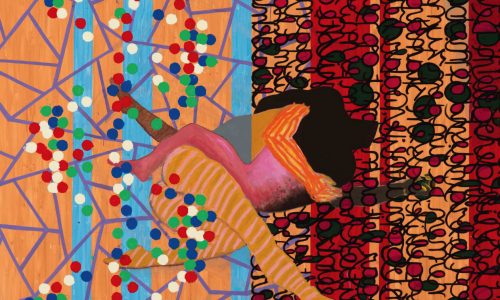
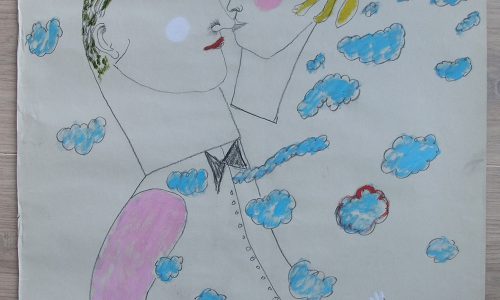
Looking at it the first i see is the FACE : the Face with eyes, a nose and mouth and then i realise that this is part of the female figure of the couple depicted in the painting. There is always an aspect of fun in the paintings by Roede, but i can not look at the couple and bird in the painting , without seeing the face first. Pwerhaps that is the fun part of this painting.

the Couple by Jan Roede

www.ftn-books.com has some niece and early publications by Jan Roede available

Posted on 26 Comments

10 great and iconic buildings, no. 1

This list is invented to make some quick and easy blogs for this month filled with festivities. I chose the buildings because i think they belong to the most important from all buildings realized in the last 100 years.

So here is no. 1. Falling Water house, by Frank Lloyd Wright

We have never visited this one, but hope that at some time we will. Whenever there is a chance to visit and enter a great building we do not hesitate and enter…. In the past there were the Empire state, Eifel tower, Musee Louis Vuitton, Atomium, the Glasshouse in Retiro Park Madrid and so many more, but this one is probably the highest on the wish list. Together with the Rothko chapel it would be the ultimate US destination for us.

Waterfall house by FLW

The house is build over the waterfall and combines the best in japanese landscape architecture together with the modernism of FLW. Build as a vacation home for the Kaufmann family, the building quality was far less than perfect. It was necessary to restore it in order to preserve it. But restoration has completed some decades ago and now the house is a museum and can be visited .

www.ftn-books.com has some nice Frank Lloyd Wright publications available.

Posted on 15 Comments

A Willem Sandberg Xmas card

I found this picture at the Herb Lubalin center who has this in its collection. A very nice and typical Willem Sandberg card to wish you a Merry Christmas in 1958.

Schermafbeelding 2020-09-01 om 16.58.31

an old wish, but a new one from me….. a Merry Christmas 2021


Many Sandberg and Lubalin items are available at www.ftn-books.com

Posted on 20 Comments

10 great and iconic buildings , no. 2

This list is invented to make some quick and easy blogs for this month filled with festivities. I chose the buildings because i think they belong to the most important from all buildings realized in the last 100 years.

So here is no. 2. the Rietveld – Schröder house, by Gerrit Rietveld

Rietveld Schroder huis

In 1924, Truus Schröder asked well-known Utrecht furniture designer Gerrit Rietveld to design a new house for her. A recently widowed mother of three, she wanted a dwelling completely attuned to her – and to her unconventional ideas about what a home should be. Having worked with Rietveld in the past, she knew his disdain for tradition. It was a match made in heaven.

Schröder played an important role in the design process. She knew exactly what she wanted: simplicity and a space that freed rather than constrained her…. and the result one of the most iconic houses which is still inspiring for many young architects.

www.ftn-books.com has some nice Rietveld publications available

Posted on 2 Comments

Bienal São Paulo

Together with the Venice Bienale, these are the most important import art presentations in the world. Every 2 years these are held in Venice and Sao Paulo. Specially the Sao Paulo one is an all time favorit among the dutch artists and being invited for this Sao Paulo presentation is a sign that you belong to the top in the dutch art scene

The São Paulo Biennial was initiated in 1951 and is the second oldest art biennial in the world after the Venice Biennial, which was set up 1895 and served as its role model.

The São Paulo Biennial was founded by the Italian-Brazilian industrialist Ciccillo Matarazzo (1898-1977). Since 1957, the Biennial has been held in the Ciccillo Matarazzo pavilion in the Parque do Ibirapuera. The pavilion was designed by a team led by architects Oscar Niemeyer and Hélio Uchôa, and provides an exhibition space of 30,000 m2. The São Paulo Biennial features both Brazilian and international artists, and is considered to be one of the most important art exhibits in the country.

In 1962 the Fundação Bienal de São Paulo was created, taking over the exhibition organization that, up until then, had been under the sucessful management of the Museum of Modern Art of São Paulo, MAM-SP. The venue it occupies today came to house the biennials from its 4th edition onwards.

The São Paulo Biennial’s initial aims are to make contemporary art known in Brazil, push the country’s access to the art scene in other metropolises and further establish São Paulo as an international art centre. The biennial serves to bring Brazilian art closer to an international audience, and vice-versa. The international exhibitions are held under the direction of rotating chief curators.

The Fundação Bienal de São Paulo is a vibrant institution that conceives and implements artistic, educational and social initiatives. In addition to producing the São Paulo Biennial, it holds activities all year round in a pavilion that is emblematic of Brazilian modernist architecture as well as inside and outside of Brazil. A cultural institution with no political or religious affiliations, the Fundação Bienal seeks to introduce new ideas, provoke debates and educate the eye of the public with an ever-renewing sense of restlessness, purpose and questioning.

www.ftn-books.com has some nice Sao Paulo catalogues available.


Posted on 26 Comments

10 great and iconic buildings, no. 3

This list is invented to make some quick and easy blogs for this month filled with festivities. I chose the buildings because i think they belong to the most important from all buildings realized in the last 100 years.

So here is no. 3. the Barcelona pavillion by Mies von der Rohe

Barcelona pavillion

Bauhaus inspired and made as the German pavilion for the Barcelona World fair from 1929. It was demolished after the exhibition , but because of its architectural importance rebuild. This is a pilgrimage site for almost all architecture and interior design fans., since this is one of the first projects in which the architect designed the interior as well. The Barcelona chair is a true design classic which is till made.
PS. The Miro museum is nearby too….another absolute must see when you visit Barcelona
www.ftn-books.com has some ncie publications available on Miesz von der Rohe

Posted on 19 Comments

10 great and iconic buildings, no. 4

This list is invented to make some quick and easy blogs for this month filled with festivities. I chose the buildings because i think they belong to the most important from all buildings realized in the last 100 years.

So here is no. 4. the Guggenheim Museum, New York by Frank Lloyd Wright

The second museum on the list and also one of my personal favorites.

Certainly Iconic. Next to Central Park /Fifth Avenue near 88th street.

the Guggenheim Museum by Frank Lloyd Wright

My personal story on the Guggenheim. ….I visited New York 3 times and never visited the Guggenheim. All 3 times the museum was closed , one time renovation and 2 times changing the exhibitions and therefore i never had a chance to see it from the inside and walk the spiral galleries. Still i admire the buidlinge and from my books i know they have one of the greatest art collections in the world.

www.ftn-books.com has some nice Guggenheim publications available

Posted on 34 Comments

10 great and iconic buildings, no. 5

This list is invented to make some quick and easy blogs for this month filled with festivities. I chose these specific buildings because i think they belong to the most important from all buildings realized in the last 100 years.

So here is no.5. the “Colline Notre-Dame du Haut” by Le Corbusier

In my opinion deservedly the third and final project by Le Corbusier on this list.

Le Corbusie rChapel

The size of the parking gives an impression of the number of visitors that come yearly to this beautiful building. This is really in the middle of nowhere and can been seen some hundreds of meters before you come near the building itself. Inside it is even more amazing. You can see the palce ment of the windows and they cast a magical light in the interior of the building. An absolute must see building.

www.ftn-books.com has some nice books on Le Corbusier and this Ronchamp church.